


A quality bike lock is the most reliable way to protect your bike in town and in urban areas. Just a few minutes away, or even a few seconds, is all it takes to risk never seeing your precious ride again.
While a bike lock is not a foolproof guarantee, it can make all the difference by slowing down or deterring a thief. Choosing the right bike lock is therefore essential.
The characteristics of a bike lock
- Security levels: the FUB, ART, Sold Secure classification, the SRA label...
- Types of bike locks: frame lock integrated to the bike, U-lock, articulated and folding lock, chain, armoured cable, non-armoured cable, locks for accessories (wheels, saddle and seatpost, luggage, helmet and other equipment)
EVERYTHING YOU NEED TO KNOW ABOUT BIKE LOCKS
Security levels
Three independent bodies are responsible for evaluating bike locks according to their effectiveness.
These are:
- The FUB: French Federation of Bicycle Users
- ART: in the Netherlands
- Sold Secure: in Great Britain
These bodies test the products themselves and rate them. The FUB classifies locks into two levels: the "1 wheel" level for recommended models, and the "2 wheels" level for the safest models. ART assigns ratings more conventionally on a scale of 1 to 5. Sold Secure issues recommendations in the form of medals: Gold, Silver and Bronze. Some insurers refer to these classifications: they then require cyclists to equip themselves with a recognised lock in order to insure their bike.
Some locks are also classified as "SRA" (Sécurité et Réparation Automobile). SRA is a professional body whose remit includes participating in the fight against vehicle theft. It draws up very strict specifications and tests for bike locks: a guarantee of high resistance. Insurers, all of whom are members of SRA, often require a lock bearing the SRA label.
Furthermore, lock manufacturers themselves test their products and assign them a rating or a resistance duration against break-in attempts. Of course, these ratings are not granted in a neutral and independent manner: they primarily serve to differentiate models according to their range level within the manufacturer's catalogue.
Types of bike locks
Bike locks fall into two main categories: locks designed to protect the bike itself, and locks dedicated to components or accessories, such as seatposts and saddles.
Locks to secure your bike
The U-lock
A saying goes that a poor U-lock is better than any good lock of another type. The most effective model for preventing or delaying theft, the U-lock is characterised by a weight that often exceeds a kilogram due to the use of thick, heavy and dense steel, while still being lighter and stronger than a chain. It measures approximately 10 cm in width and between 15 and 30 cm in length — some models allowing several bikes to be locked — and most often features a mounting system on the bike frame to make carrying it easier. Moreover, some manufacturers, confident in their products, offer a flat-rate reimbursement in the event of theft.
The frame lock
Located at the rear wheel, it has a horseshoe shape. This fixed lock, attached to the chainstays (via clamps or fixing eyelets, or integrated from the outset into the bike's design), is a very effective deterrent: to overcome it quickly, a thief risks damaging the bike. Made of steel, it is not lightweight but has the advantage of being integrated: to release the wheel, it opens and stays in place. Its bulk is therefore imperceptible and it does not need to be stored away. Of course, it only locks the wheel and does not anchor the bike to a fixed point: it should therefore be reserved for short stops in town.
The folding lock
The folding lock resembles, in shape, a carpenter's folding ruler. Pleasant to handle, more effective than cables and less bulky than U-locks once folded, it nevertheless does not rival them in terms of protection. The connection points between the various flat steel bars represent as many weak points. The folding lock should be reserved for short stops.
The chain
To classify a chain lock at the "1 wheel" level, the FUB requires its links (made of hardened steel) to measure a minimum of 6 mm in diameter. To reach the "2 wheels" level, the weight becomes very high. This type of lock, whose individual links are inseparable, is fastened with a key or combination padlock. The longest models allow one or more bikes to be easily attached to a post. A short chain can be used to secure a wheel to the frame. Due to its weight, it is advisable not to carry the chain with you and to leave it attached at the parking point.
The armoured cable
The armoured cable, also known as a "boa" or "python", consists of several steel cylinders articulated together. A steel cable runs through the entire length on the inside. Flexible, practical to store and use, the build quality varies greatly and largely determines its effectiveness. The connection between the cable and the lock body is notably a critical point. Even a good model remains less effective than a U-lock and should be used for short stops.
The non-armoured cable
This type of lock features a steel cable surrounded by a flexible plastic sheath. The thickness of the sheath can be misleading: these models resist only a few seconds against a thief equipped with bolt cutters. It should be used not to secure the bike itself, but to secure accessories, such as a bag, to the bike. The non-armoured cable is of course light and easy to store. In the same vein, there are very compact locks made of retractable steel cables. These too serve to secure an accessory, such as a helmet.
Locks for accessories
Thieves do not limit themselves to targeting whole bikes. Depending on the opportunity, they may leave with just a wheel, the seatpost and the saddle. To prevent a bike from being stripped and rendered unusable, manufacturers have designed anti-theft systems to replace wheel axles or seatpost clamps.
The Tranz-X system uses, for example, specific keys, while the Lock'N'Roll or Ixow Safering Gravity axles only open once the bike is turned upside down. Kryptonite offers a similar system (WheelNutz), this time for bolt-on axles. With these solutions, it is sufficient to carefully anchor your bike to a fixed point so that it cannot be turned over.
Finally, as mentioned earlier, a small cable lock can be used to secure an accessory, such as a bag.
Which bike lock should you choose?
Your choice will be guided by several criteria, namely:
The investment
A quality bike lock is an investment in security, but it must be weighed against the value of the bike to be protected. A sensible calculation is to invest no more than around 20% of the bike's price in the lock, with a minimum of €30 for a reliable model. Of course, all of this must be adapted to the situation. If your bike, even if inexpensive and bought second-hand, is your only means of getting to work, it is its essential function that justifies the investment. If your bike is kept outside or has to be parked in a high-risk area, the investment must again be carefully considered. All bikes are at risk of theft, from the highest-end to the most well-used.
Ratings
The ratings provided by independent bodies and by manufacturers themselves give useful guidance when making a choice, based on the duration of parking (quick stop, a few hours, all day, overnight) and the area (rural, semi-urban, urban, major city). A simple piece of advice to follow: a rigid lock is always more resistant than a cable lock. And among rigid locks, for extended parking, the U-lock has proven itself and will be the safest for securing a whole bike. For very short stops, in the absence of a U-lock, the frame lock is recommended.
The choice of length
The shape of the bike, the number of bikes to be locked and the type of anchor point should all be considered. For locking to a dedicated post in town, a standard U-lock (approximately 25 cm in length) or a folding lock (approximately 75 cm) is perfectly sufficient. To lock two adult bikes to a post, an adult bike and a trailer or children's bikes, or to attach to certain barriers or thick posts such as an electricity pole, a 30 cm U-lock, or a folding model of more than 90 cm, is recommended.
The choice of lock
Key locks are the most common. Among them, disc cylinder locks are very frequently used for their resistance to picking attempts. Bike locks are sold with a spare key: it is advisable to keep it at home, separate from the key used daily. Some manufacturers such as Abus or the Axa service anticipate key loss and can provide new ones on request, after verifying the lock's reference. A card with a personalised code is generally provided at the time of purchase and will prove invaluable in such a situation.
Using your bike lock properly
A good bike lock is worthless if certain precautions are not taken when using it.
Identify a suitable fixed point
There is no point locking your bike to a simple post just 1 metre high. The thief will calmly lift the whole thing until the bike is freed — not everyone always thinks of this obvious point! The vast majority of thefts are made possible by poor bike security. A tall post or a closed barrier are the most suitable options.
A location frequented by passers-by, with a good number of bikes already parked, is ideal: it will offer little discretion to a potential thief. A corridor or a building courtyard are not necessarily safe: half of all thefts occur there.
Once the location and fixed point have been found, it is essential to lock the bike by the frame, and then think about securing accessories as a second step. The front wheel can often be locked to the frame and post with one and the same lock. The lock's keyhole is oriented downwards, to limit picking attempts.
The ideal configuration
A U-lock secures the frame and front wheel to a suitable fixed point. A second lock, such as a chain, secures the rear wheel to the frame and post, even leaving this second lock on site when the bike is not locked up. The seatpost is fitted with an anti-theft axle.
Tip: A U-lock can be used to secure the frame, the front wheel and the rear wheel all at once. Simply remove the front wheel to form a compact assembly that the U-lock can encompass.
Common mistakes
Locking to a post that is too low, using only a cable lock to secure your entire bike, failing to secure the wheels or the seatpost, or worse, only locking one wheel to the fixed point and not the frame... Many cyclists have returned to find their front wheel locked up alone, with the rest of the bike gone. And also: failing to secure accessories, such as a bag, especially if they are only attached to the bike with a quick-release fastener.
Finally, having your bike engraved is a complement to using a bike lock. Let us mention the Bicycode scheme, launched by the FUB. The bike, marked with a unique number, is registered on www.bicycode.org, along with the owner's contact details. 40% of stolen bikes are recovered: such a system gives victims a greater chance of being contacted.
ACCESSORIES - Bike Locks
-
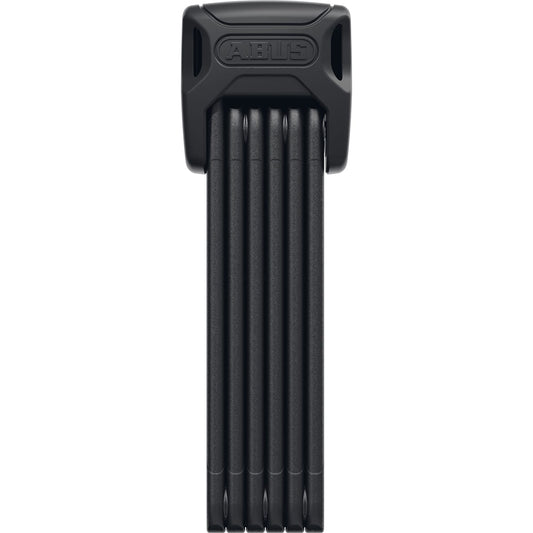
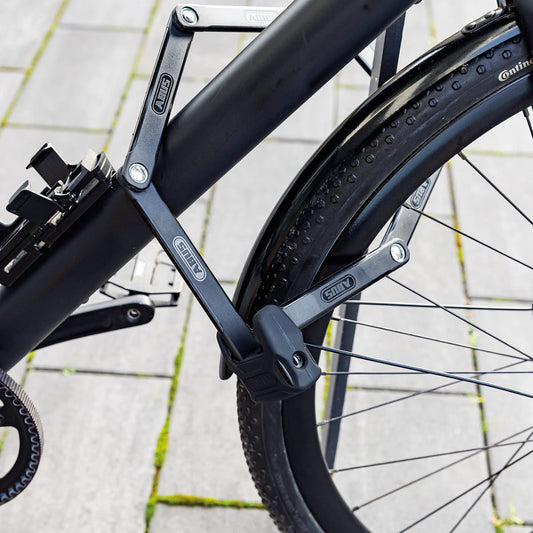
ABUS BORDO 6000K Folding Lock + SH Mount
Regular price From 79,99 €Regular priceUnit price per -
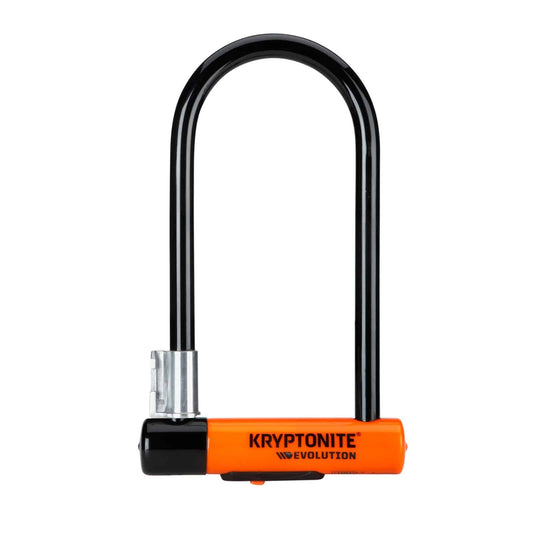
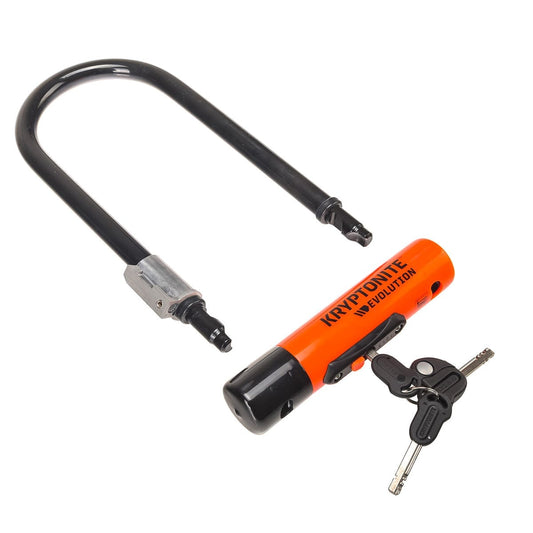
KRYPTONITE EVOLUTION STANDARD U-Lock
Regular price 69,99 €Regular priceUnit price per -
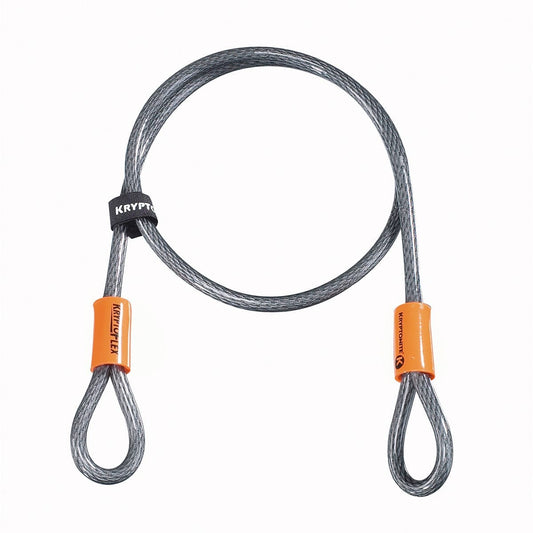
KRYPTONITE KRYPTOFLEX 4Ft LOOPED CABLE Lock Cable Without Padlock
Regular price 14,99 €Regular priceUnit price per -
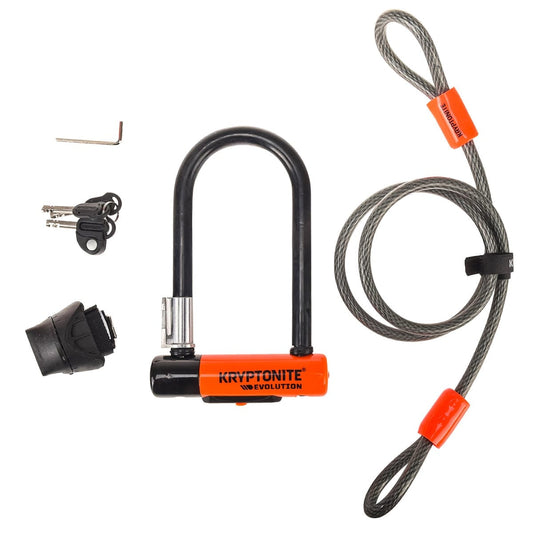
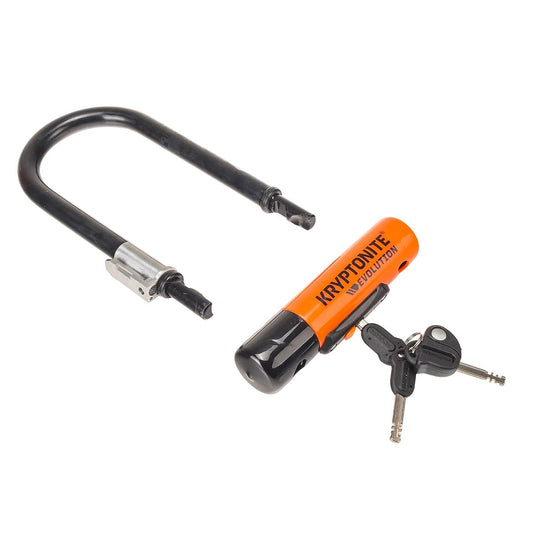
KRYPTONITE EVOLUTION MINI-7 U-Lock + FLEX Cable
Regular price 69,99 €Regular priceUnit price per -
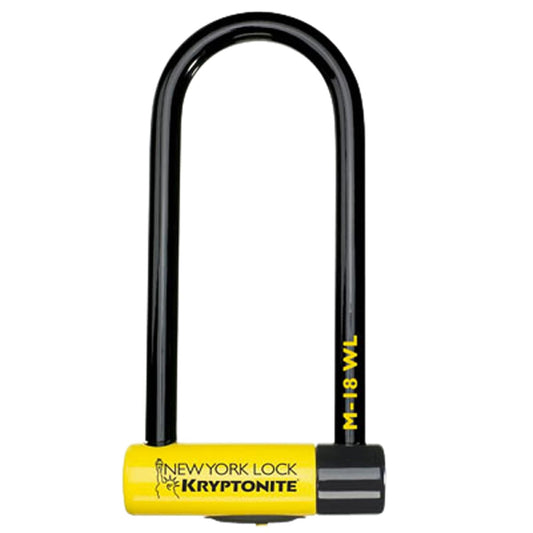
KRYPTONITE New York M18-WL U-Lock
Regular price 129,90 €Regular priceUnit price per -
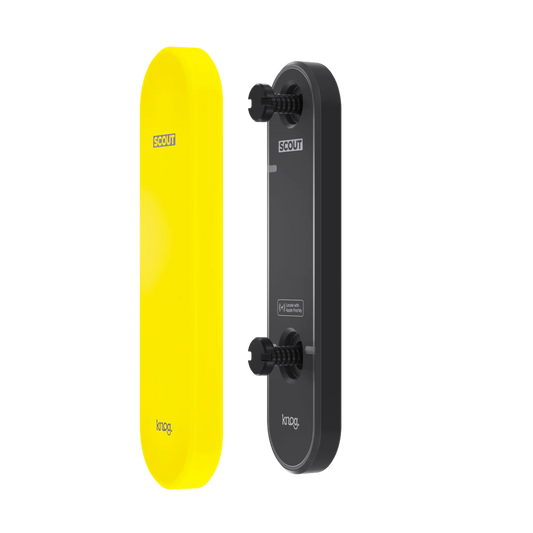
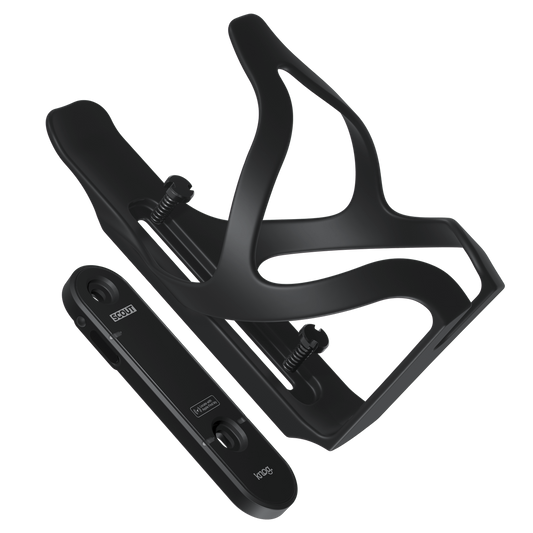
KNOG SCOUT Bike Alarm and Tracker
Regular price 44,99 €Regular priceUnit price per -
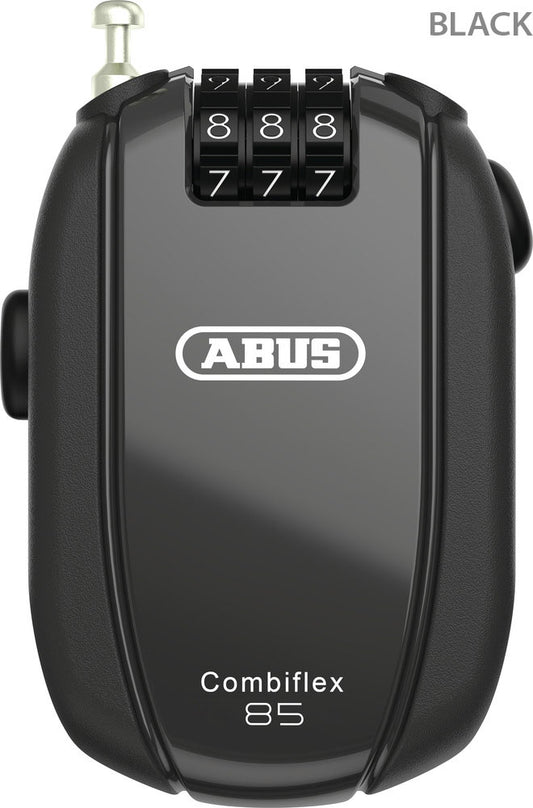
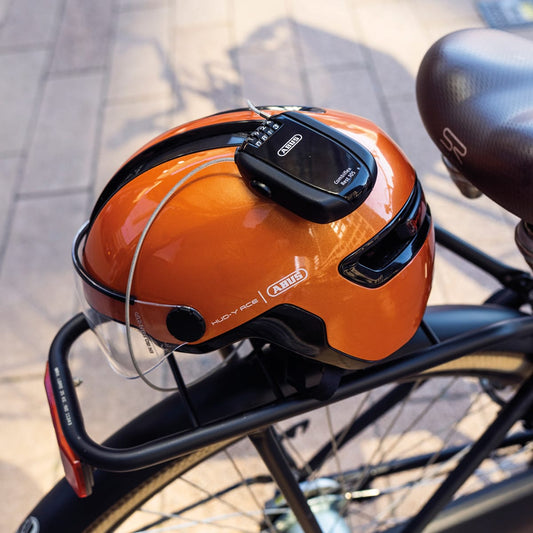
ABUS COMBIFLEX REST Retractable Cable Lock
Regular price 19,99 €Regular priceUnit price per -
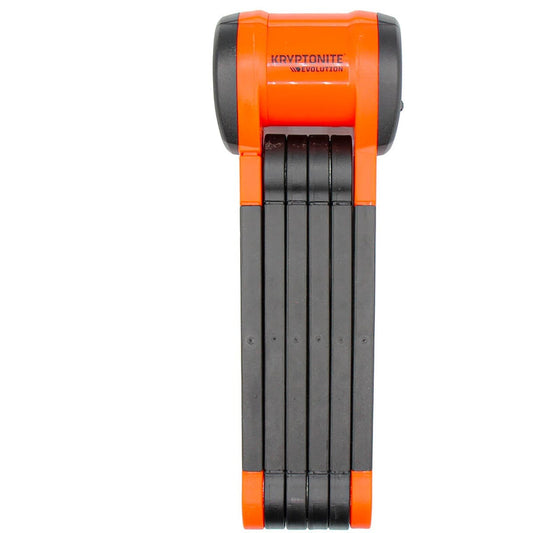
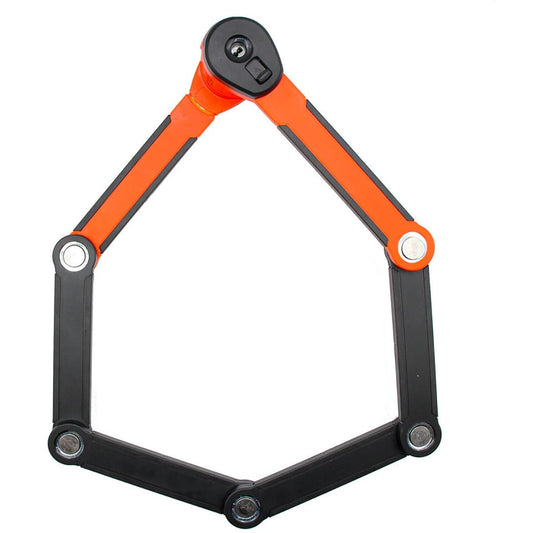
KRYPTONITE EVOLUTION 790 Folding Articulated Lock
Regular price 99,99 €Regular priceUnit price per


