


How to choose MTB hubs?
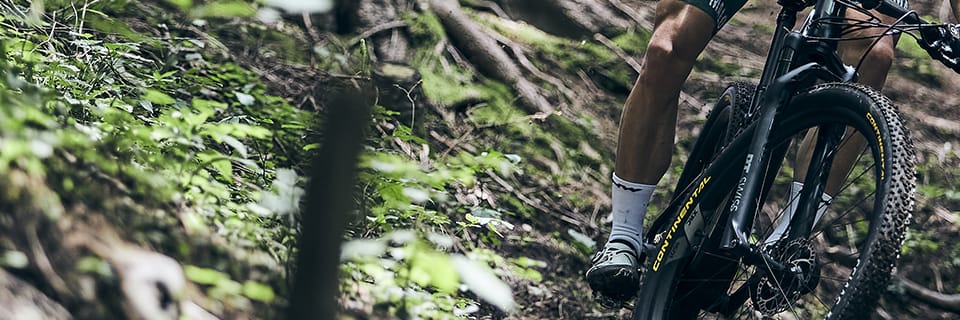
The MTB hub is the component that acts as the interface between the wheel and the MTB. Here is how to help you select one according to your axle standard.
Standards
- Front wheel axle dimensions: 9x100 mm, 15x100 mm, 15x110 mm (Boost), 15x110 mm (Predictive Steering), 20x110 mm and Lefty type
- Rear wheel axle dimensions: 9x135 mm, 12x135 mm, 12x142 mm, 12x148 mm and 12x150 mm
- Types of ball bearings
- Number of spokes
- Brake types: V-brake, 6-bolt disc or Centre-Lock disc
Types of hubs
The trickiest part of choosing a hub is finding the correct axle dimension, compatible either with your fork or your frame. It is worth knowing that axle diameters and lengths differ between the front and rear wheel. It is therefore essential to check your components beforehand by measuring the distance between the fork or frame dropouts. To make the task a little easier, some brands now offer hubs that are convertible to almost all standards simply using a set of adapters.
The ball bearings housed in the hub can be of two types: either "cup and cone" A, requiring more regular maintenance but generally reliable over time; or "sealed bearing" B type, which is maintenance-free (you will simply need to replace it when it fails).

Regarding the number of spokes, the more you have the stronger the wheel; conversely, the fewer there are, the lighter but more fragile the wheel will be. A standard build has 32 spokes. Reminder: the rim and the hub must have exactly the same number of holes.
Finally, note that the braking system must also be taken into account. The market offers several types of hub, some for V-Brake fitting and others for disc brakes. For the latter, there is a specific version for 6-bolt fixing and another for Centre Lock.
Which hub for my riding style?
Your choice of hub will be directly determined by the components you already own, namely: the MTB rims (and therefore the number of holes), the brakes, the frame or the MTB fork.
If you are going to build a new bike and have not yet acquired your frame/fork or rims, here is what we recommend:
Hiking / Cross-Country
For this discipline, 9 mm is the simplest to use, both front and rear. That said, for better steering precision you can opt for 15 mm at the front. The Boost format is also becoming increasingly significant in this area.
All-Mountain / Enduro
It is recommended to fit 15x100 or 15x110 mm (Boost) at the front and 12x142 or 12x148 mm (Boost) at the rear for maximum rigidity and robustness in these disciplines.
DH / Freeride
For the most extreme disciplines, 20 mm at the front and 12x150 mm at the rear — or even 12x157 mm — are mandatory.
Découvrez tous nos conseils & Tutoriels
MTB - Hubs
-
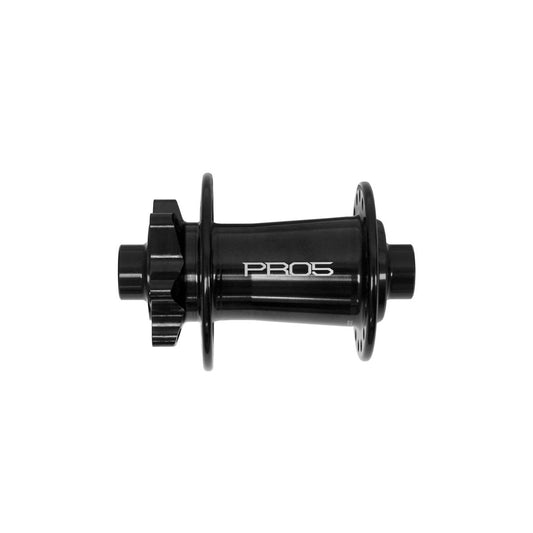
HOPE PRO 5 Front Hub 15x100mm 6-Bolt Black
Regular price 114,90 €Regular priceUnit price per -
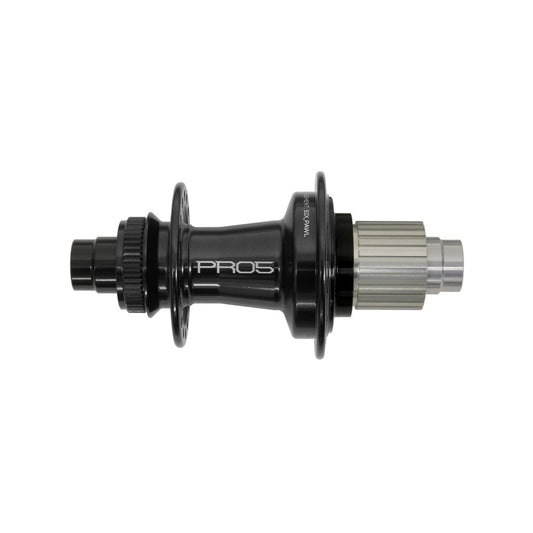
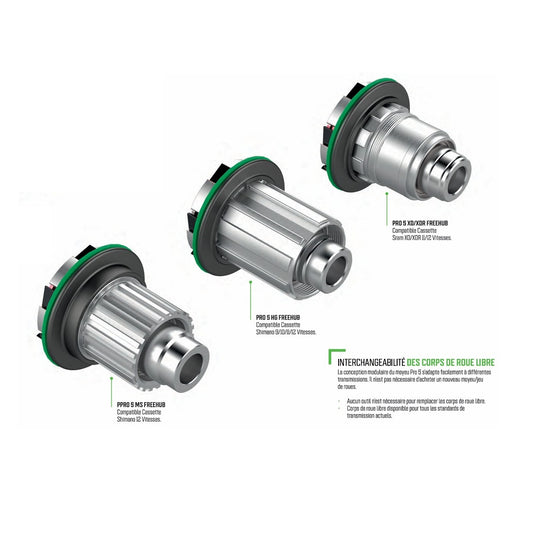
HOPE PRO 5 Rear Hub 12x148mm Centerlock Black
Regular price 249,90 €Regular priceUnit price per


