How to choose your road bike saddle?
One of the elements that can ruin a wonderful ride on the most beautiful of roads: the bicycle saddle. Expectations and sensations differ according to cyclists' body shapes, but here are a few pointers to help you see more clearly through the vast choice of models.
Standards
- The profile: rounded, flat, semi-rounded
- The central channel: none, relieved or cut-out
- The width
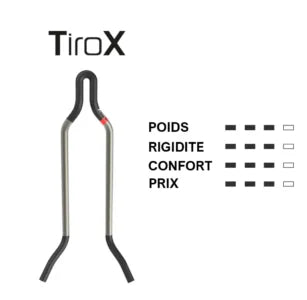
- The rail material: titanium, steel, aluminium, carbon, ...
Saddle types
It is important to emphasise that it is not possible to guarantee that any particular model will definitely suit you. Only testing over several rides of different durations and with different adjustments allows a model to be validated. However, here is what is generally reported by both users and manufacturers.
Road saddles can be classified under three types of shape:
Rounded
Generally appreciated for long distances and by cyclists looking for comfort. Weight is often better distributed, and the shape limits chafing over time.
Flat
Designed for short distances and/or intensive effort. Appreciated for races requiring frequent changes of position.
Semi-rounded
In order to offer versatile saddle models, an intermediate shape between rounded and flat is often found.
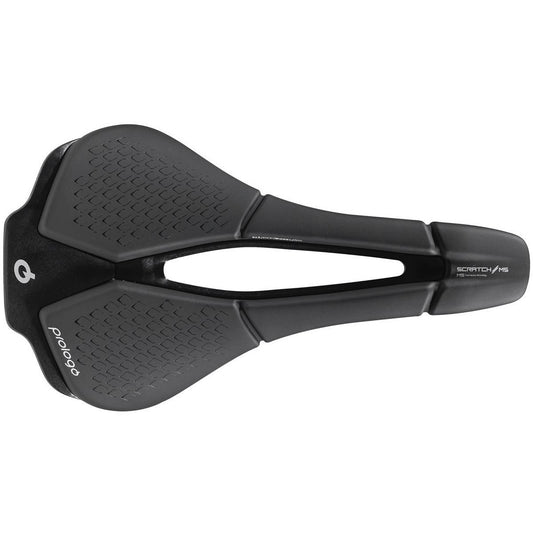
To reduce pressure on the perineal area, some saddles may feature a channel on the central section of the saddle. This channel can be simply relieved a to reduce pressure, or even fully cut out b to eliminate it in that area. Please note that this type of saddle does not necessarily suit everyone — the pressure is not entirely removed but redistributed to other areas of the seat.
Central channel: Solid, Relieved or Cut-out?
To limit numbness, many models incorporate a perineal relief channel.
Relieved channel (Flow):
A central groove reduces pressure on soft tissues. It is the ideal compromise if you are looking to relieve the perineal area without losing the feeling of support. It avoids the "edge" effect that some cyclists experience on fully cut-out saddles.
Typical profile: Cyclist with average flexibility, prone to mild numbness, but who appreciates a well-supported and stable seat.
Cut-out saddle (Open):
A full cut-out eliminates all contact in the perineal area and improves ventilation. If you suffer from severe numbness or chronic urogenital pain.
The opening allows air circulation, limiting the build-up of heat and moisture (factors causing skin irritation). Flexibility: the shell being "split" in two, it often offers a slight lateral flex that can accompany the movement of the pelvis during pedalling.
Typical profile: Very flexible cyclist who tilts the pelvis far forward (low aerodynamic position), or a cyclist sensitive to nerve compression.
How to decide?
| Feature | Solid Saddle | Relieved Channel | Cut-out Saddle |
| Pressure relief | Low | Moderate | Maximum |
| Weight distribution | Optimal (large surface area) | Balanced | Concentrated on the sit bones |
| Seating stability | Maximum | Very good | Good (depending on shell stiffness) |
| Ventilation | None | Low | Excellent |
Saddle width
It is often determined by two characteristics: the size of your pelvis and your position on the bike.
The width of your pelvis will directly affect the distance between your sit bone* contact points, i.e. the 2 contact points with your saddle. For a wider pelvis, it is recommended to choose a slightly wider-than-average saddle, and vice versa. The standard saddle width is around 135 mm.
Your position on the bike will also influence saddle width. Indeed, the distribution of your weight between the saddle, the handlebars and the pedals differs depending on whether you adopt a sporting or more upright position. The more upright you are, the more weight is placed on the saddle; in that case, it is recommended to opt for a slightly wider saddle. Be careful, a saddle that is too wide can hinder the pedalling motion and cause inner thigh chafing over time, so it is not recommended for sporting road cycling.
Saddle length
It is defined by two categories: short saddles and long saddles:
Short saddles, with a length of less than 250 mm, make it easier to find a position quickly and provide more clearance when moving to the rear of the bike on steep descents. Moreover, when standing on the pedals, the short saddle rubs less against the thighs.
For your information, all brands offer short saddles and new releases from major brands focus primarily on this product category.
Long saddles, with a length exceeding 250 mm, are ideal for rides where the position is not frequently adjusted. These saddles are favoured by professional racers as they can find their positioning on a long saddle and move along it according to the race profile (on the nose of the saddle for hard accelerations / at the rear of the saddle to stretch the thighs).
Finally, it is not uncommon to find the same saddle model available with different types of rails. Beyond the weight saving that each material can offer, the type of rails will also provide more or less comfort:
- Titanium: the most comfortable with a controlled weight
- Steel: relatively comfortable
- Aluminium: relatively lightweight
- Carbon: the lightest, with the added benefit of excellent absorption of shocks and vibrations
Important: carbon rails are commonly oval-shaped rather than round, so they require a seatpost with a saddle clamp that is compatible:
Which saddle to choose?
Once again, it is difficult to state anything with certainty, but to summarise, here is some guidance.
For sporting road cycling, a semi-rounded saddle of a standard width (approx. 135 mm) suited to the size of your pelvis should be appropriate. A flat saddle will also suit riders who like to change position regularly.
For leisure or recreational cycling, a rounded saddle of a standard width, or slightly wider depending on your pelvis, should be suitable.
If you suffer from perineal pain, a saddle with a relieved or even cut-out channel should resolve the issue.
If, despite this advice, you are unable to find a model that allows you to ride without pain, it is recommended to consult a postural analysis specialist.
Frequently asked questions?
Why choose a short saddle (Short-fit)? Short saddles (less than 250 mm) are increasingly popular in competition. They allow riders to maintain an aggressive, aerodynamic position for longer by reducing pressure on the saddle nose at maximum torso inclination.
Is gel padding essential for comfort? Not necessarily. On long rides, padding that is too soft (thick gel) can compress and end up putting pressure on sensitive areas. For regular use, a firm high-density foam is often more comfortable over time than an overly soft gel.
What is the lifespan of a bicycle saddle? A saddle does not last forever. The shell eventually loses its tension and its filtering capacity. On average, depending on the material and your weight, it is advisable to check for sagging in your saddle every 15,000 to 20,000 km.
Should I tilt my saddle forward to reduce pain? As a general rule, a saddle should be perfectly horizontal (check with a spirit level). Excessive forward tilt (nose pointing down) causes the cyclist to slide forward, overloading the arms and knees. If you need to tilt it to stop the pain, it means the model or saddle height is not suitable for you.
Is a cut-out saddle less sturdy? No. Manufacturers compensate for the central opening by using stiffer materials on the side walls (injected carbon, reinforced nylon) and strategically positioned rails to maintain the structural integrity of the saddle.
Does the central opening weaken the padding? The padding of a cut-out saddle is designed to be denser on the support zones (the sides) so as not to sag towards the opening. It rarely degrades faster than a solid saddle, provided you choose a quality brand.
Can a cut-out saddle be used for MTB? Yes, it is perfectly possible, but beware of mud or water splashing up through the central hole. Many MTB "Open" models integrate a mesh or thin guard to prevent this inconvenience while retaining the pressure-relief benefits.
Why do some pros still use solid saddles? Some riders prefer an ultra-stable platform to maximise power transfer without any shell deformation. It is also a matter of morphology: a narrow pelvis and limited pelvic tilt make the perineal area less vulnerable to compression.
ROAD - Saddles
-
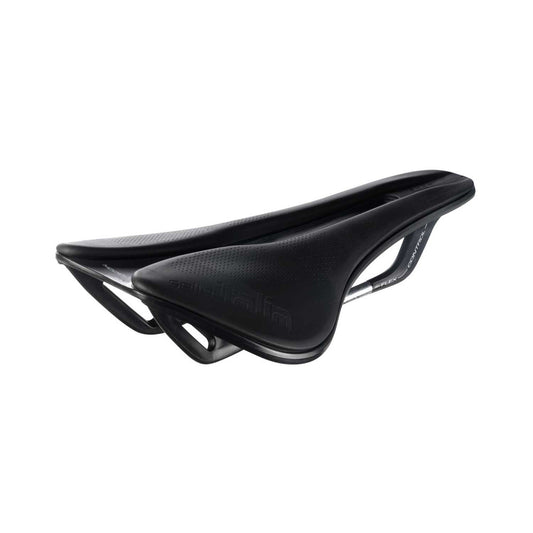
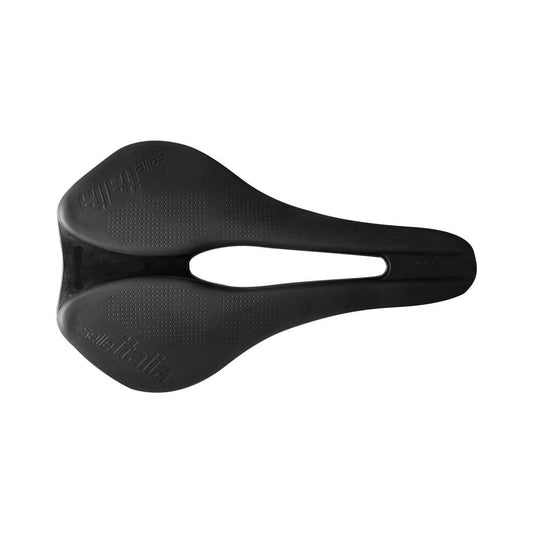
SELLE ITALIA MODEL X GREEN SUPERFLOW L Saddle Fec Black Rails
Regular price 29,99 €Regular priceUnit price per -
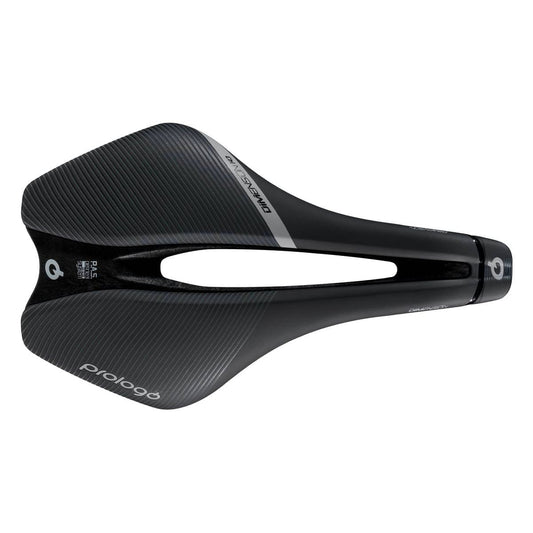
PROLOGO DIMENSION Saddle TiroX Rails Black
Regular price 79,99 €Regular priceUnit price per -

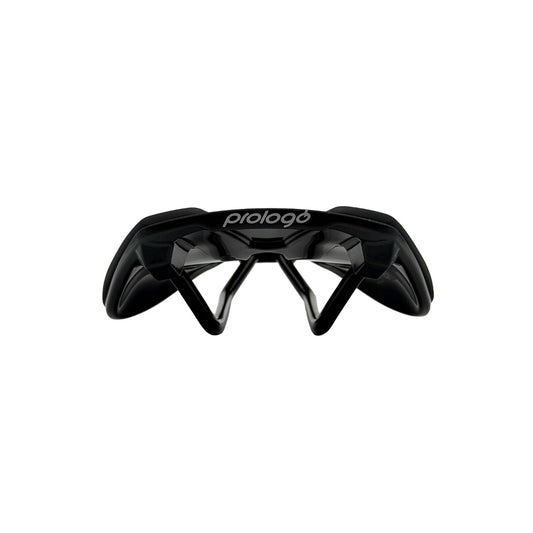
PROLOGO NAGO R4 PAS 137 Steel Rails Saddle Black
Regular price 49,99 €Regular priceUnit price per -

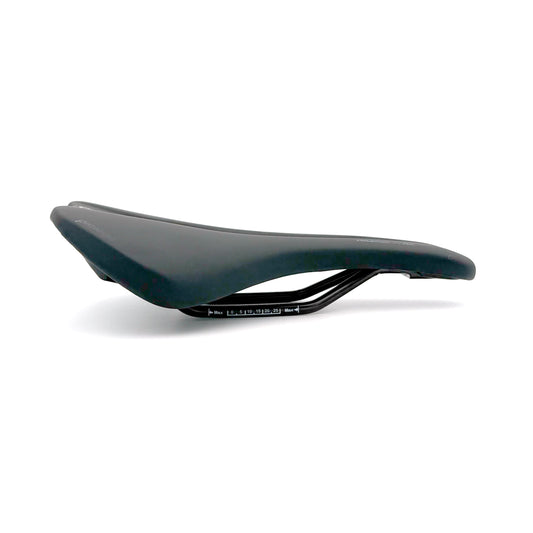
PROLOGO DIMENSION RS 145mm Steel Rails Black Saddle
Regular price 39,99 €Regular priceUnit price per -
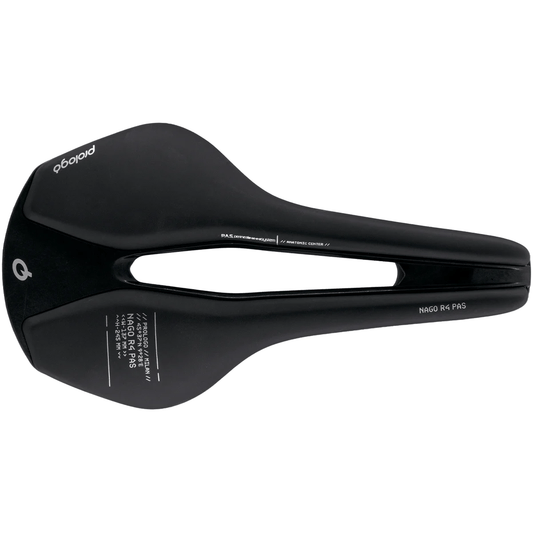
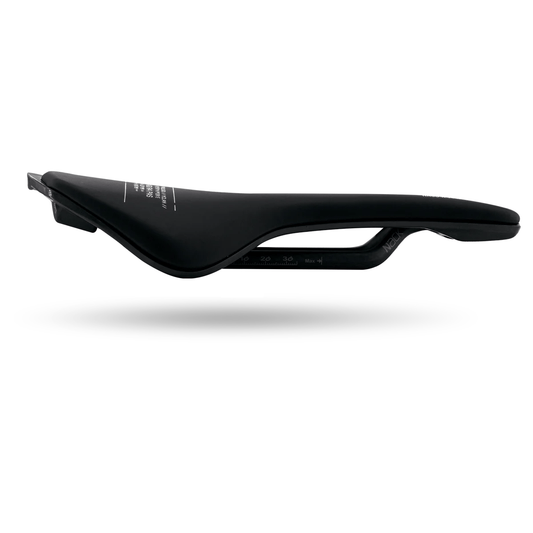
PROLOGO NAGO R4 PAS 137 Tirox Black Saddle
Regular price 129,99 €Regular priceUnit price per -
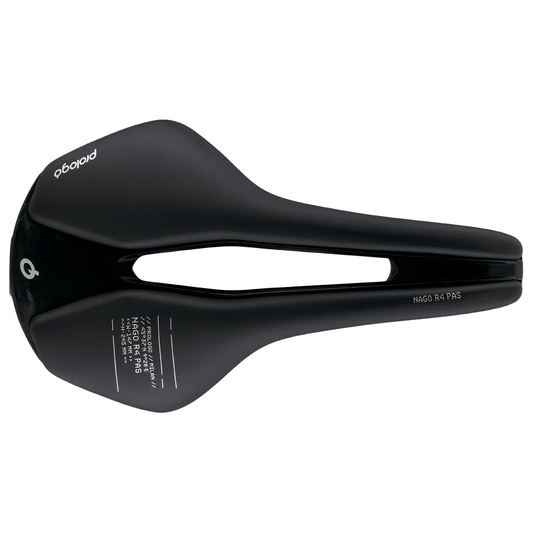
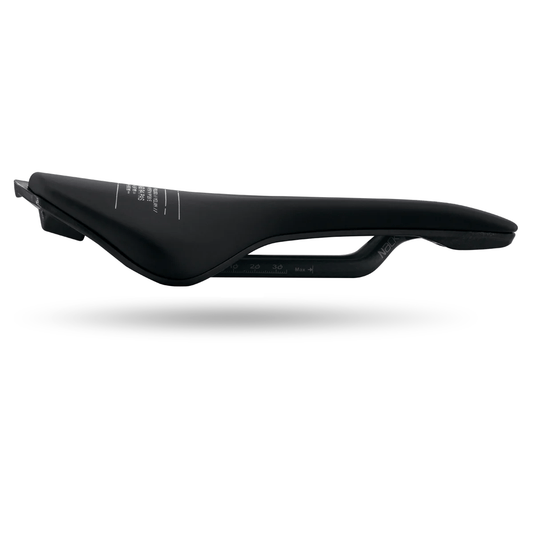
PROLOGO NAGO R4 PAS 137 Nack Black Saddle
Regular price 199,90 €Regular priceUnit price per -
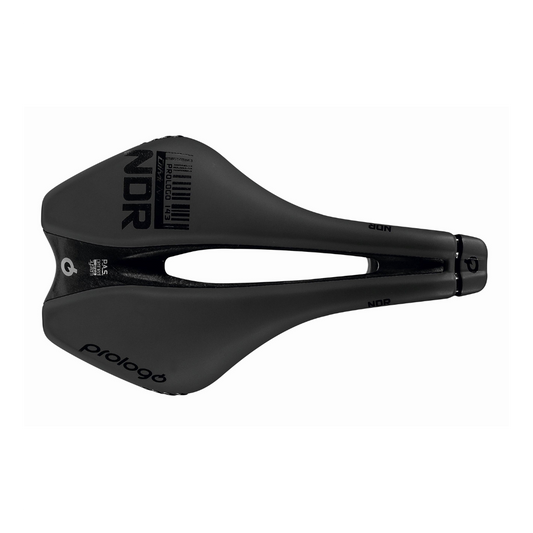
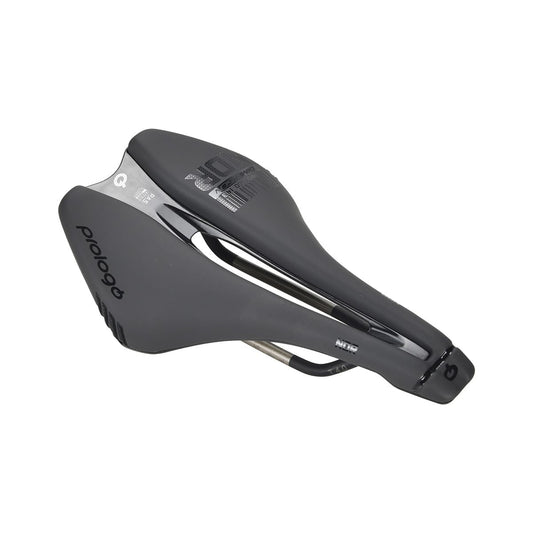
PROLOGO DIMENSION NDR Rails T4.0 Anthracite Saddle
Regular price 89,99 €Regular priceUnit price per