


How to prepare for a sportive?
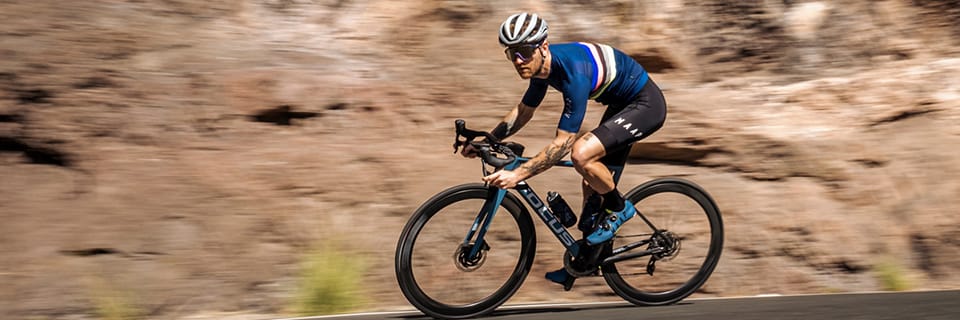
This is THE date marked in red in your cycling calendar! You have decided to take part in a sportive, which will be the highlight of your cycling season. You have chosen a race suited to your level, to challenge yourself on a route you enjoy. Motivated 100%, you are looking to put all the chances on your side to reach your goal.
For beginner sportive riders, the prospect of pinning on a first race number can seem daunting. That is why Probikeshop is here to advise you on how to prepare properly for a sportive.
PREPARING PHYSICALLY
Specific preparation for a sportive is built on a solid endurance base: you need to have accumulated the kilometres before hoping to optimise your form. Once the date of the sportive is known, you need to establish a training plan to programme a progressive build towards the goal. This physical preparation must allow you to progress and bring out the best of your abilities on race day.
A training cycle spread over several weeks
Your training programme for the sportive runs over a cycle of several weeks (a minimum of 8 weeks), with a progressive increase in load and mandatory recovery periods. Your programme includes specific sessions at varying intensities, covering strength, power and cadence work. The final weeks of preparation are used to develop the specific qualities linked to the characteristics of the route ahead. It is advisable to target 2 qualities to improve as a priority based on your goal, the profile and the length of the sportive.
Targeted progression on the qualities required for the sportive
For a long sportive, for example, you will focus on endurance by progressively increasing your time in the saddle, ride after ride, first at low intensity and then incorporating higher intensities towards the end. If the profile is mountainous, you will do exercises on climbs, at moderate pace, at threshold, with interval training, to accustom your body to this type of effort. Since every route has its own characteristics and every cyclist has their own strengths and motivations, it is up to you to identify the most worthwhile areas for improvement.
Recovery is part of training
To prepare properly for your sportive, it is necessary to accumulate a sufficient training load in advance, but it is even more important to recover well as the race approaches. The final 2 weeks of preparation are therefore devoted to the tapering phase, the aim of which is to reduce fatigue without losing the gains made in training. It is advisable to reduce training volume and stick to short rides with well-targeted intensities, to lock in your performance level.
For more on cycling preparation, see our tips for training and improving on the road bike.
PREPARING MENTALLY
The success of your event depends largely on your physical preparation, but also on your mental resilience – a dimension that must absolutely not be overlooked during training and during the race. At the heart of your approach, the choice of sportive must serve as a powerful source of motivation.
A motivating and realistic goal
The chosen event must motivate you enough to sustain a rigorous preparation, which demands constant commitment, both physically and mentally. Your goal is clearly defined from the outset: the sportive must represent a good sporting challenge while remaining realistic given your level. Rather than focusing on the result itself, approach training and the race as a human and sporting adventure, with the idea of getting to know yourself better. To energise your preparation, do not hesitate to bring friends along on your challenge.
Accepting the difficulties of training and the uncertainties of the race
Of course, your journey to the sportive will not be plain sailing: there will be periods of fatigue, doubt and questioning. You must accept these difficult moments and follow the guidelines of your programme as closely as possible. You will reap the rewards of your discipline on the day of the sportive.
On race day, your mental strength will take over from your physical fitness to support you throughout the effort. An external event may always disrupt your progress, but your motivations will help you push through and finish the race.
PREPARING YOUR EQUIPMENT
If the cyclist is ready, their bike and equipment must also be up to the task. It is important to adapt your equipment according to the type of route, your rider profile and the weather conditions.
Adapting your equipment to the route and your rider profile
If your sportive involves significant elevation, it is essential to choose the right gearing. Do not hesitate to fit a cassette with a large sprocket (up to 32 teeth), paired with a small chainring (34 or 36 teeth), to pedal smoothly and save your energy. Indeed, in a long-distance event, it is vital to keep the legs spinning in order to preserve your muscular energy.
If the sportive route is fairly flat, the use of deep-section rims allows you to gain aerodynamic advantage. We advise you to adapt your strategy according to your build and play to your strengths. If you have a "lightweight climber" profile, there is no point setting off with deep-section rims. One idea to bear in mind: lightweight equipment is always beneficial on races with significant elevation gain.
A sportive on cobblestones also requires adequate material preparation. We recommend fitting wider, more robust tyres and adjusting the pressure to find the best balance between comfort, grip and efficiency. Other techniques have proven effective for riding on cobblestones, such as using a double layer of handlebar tape to better absorb vibrations.
The longer the event, the more comfort should be prioritised over performance. You can adjust your position on the bike by working on the cockpit (handlebar and stem) and the saddle. With a slightly more upright posture, you improve your comfort on endurance races, reducing tension in the back and the joints of the upper limbs.
Choosing your clothing kit
Your clothing kit must include a good pair of bib shorts, capable of providing support over long hours in the saddle. A breathable jersey is essential for coping with intense heat. If the weather is threatening, pack rain gear. You should always adapt your clothing to the conditions and the season.
Your cycling equipment (hardware and clothing) and your set-up must be tested and validated in training, well in advance of the sportive, to avoid any unpleasant surprises on race day.
WORKING ON YOUR TECHNIQUE
Do not neglect cycling technique, especially if you are preparing for a mass-participation event with a demanding profile, such as the Étape du Tour (mountains) or the sportives of the great northern classics (cobblestones).
Riding in the peloton
For this type of sportive that brings together thousands of participants, you need to get used to riding in the peloton and anticipating corners well. Riding in a group is an advantage if you find yourself relaxed in the bunch and manage to shelter from the wind. But if you remain tense on the wheels, you will waste energy.
Descending major mountain passes
If your route takes in major mountain passes, it is strongly advisable to work on the descents: position (hands on the drops), relaxation, smooth handling, braking technique. If you are gripping the brakes too tightly, you also risk wasting energy. On the contrary, when you are at ease, you can use the descent to recover well and enjoy a rare pleasure – descending a major pass on a bike. This way, you will be in the best physical and mental state to tackle the challenges that follow.
Including specific sessions to work on your technique
Working on and improving your descending technique is certainly not about taking unnecessary risks! The aim is to build confidence in handling the bike, to familiarise yourself with the descending position, to focus on anticipating braking points and picking the best lines. As part of your preparation for a mountain sportive, we encourage you to include specific mountain sessions in your training programme, to work on both the famed "climber's pedal stroke" and descending technique.
The same logic applies if you are preparing for a sportive that takes in cobbled sectors or climbs. Ideally, you should familiarise yourself in advance (if possible) with the demanding terrain you will face, test your equipment and improve your technique on the cobblestones (bent arms, relaxed grip on the handlebar).
MANAGING YOUR NUTRITION AND HYDRATION
Good fuelling management is essential during a long sportive, to give your body the fuel it needs, at the right moment, to sustain the effort. Your nutritional strategy must be reliable, tested and validated in advance – nothing should be left to chance.
Staying hydrated during the sportive
It is recommended to drink one bottle per hour. The quantity can be doubled if climatic conditions are extreme, particularly hot weather for example. Consuming an isotonic drink is recommended to optimise hydration and nutrient absorption, to compensate for fluid losses incurred. You can pair this isotonic drink with a plain water bottle, which you can use to pour over yourself and offset the excess sweetness.
Choosing energy foods
It is important to eat regularly, in small quantities each time. The choice of your food (gels, bars and other energy foods) must be suited to the duration of the event. Your solid nutrition must also be integrated into an overall sports nutrition strategy, alongside the drinks you consume, to maintain a steady energy intake throughout the effort. For longer formats, do not hesitate to eat solid foods based on slow-release carbohydrates quickly (from the first half-hour). Fast-release sugars (such as gels) are more useful in the second half of the race.
Testing your nutritional strategy in training
It is essential to test your energy foods in training to assess their effects on your body. Once your fuelling is validated, you need to find the right strategy (managing intake, combining solid nutrition and hydration) and test it in conditions close to those of the event. It is strongly advised not to try anything new on race day… Better to stick to what you know!
PREPARING FOR YOUR SPORTIVE: THE FINAL TIPS FROM THE PROBIKESHOP EXPERTS
Here are the final tips from the Probikeshop experts for preparing your sportive well:
- Leave the bike aside the day before the sportive, seek calm, rest or find a small activity (outside of sport) if you are feeling stressed;
- Study the route profile one last time and review your fuelling strategy and pre-race schedule;
- On the morning of the race, do not let yourself be rushed for time: always allow a small margin so as not to add unnecessary stress;
- Plan and follow your pre-race routine: getting up, meal, preparation, warm-up;
- A proper warm-up is essential to get the engine running and avoid suffering through the first few kilometres;
- A natural nervousness may take hold before the start – use it to motivate yourself;
- Your preparation has been focused on race day: make the most of it and try to savour every moment.
Découvrez tous nos conseils & Tutoriels


