


How to choose your MTB chain guide?

Fed up with your MTB chain constantly dropping? The solution to your problem is fitting a chain guide. Here is how to choose the right one.
Standards
- Mounting type: BB mount, ISCG, ISCG 05, clamp or Direct Mount
- The number of MTB chainrings: 1, 2 or 3
- The tooth count of the large chainring
Types of chain guides
Chain guides are distinguished by the way they are attached to the frame.
When this accessory first appeared, since there was no specific mount on bikes, the fixing bracket was placed between the bottom bracket and the MTB frame, much like a washer. This mounting is known as BB-mount type. This system tended to rotate on itself under slight stress, and has since become obsolete.
To improve the system, manufacturers developed in 2003 a standardised 3-bolt mount, installed directly on the frame, called ISCG (International Standard Chain Guide). It is identifiable by the distance between the two fixing points, which is approximately 47.7 mm A.

Unfortunately, the distance between the ISCG tabs caused issues with newer generation bottom brackets (such as Press Fit or BB30 type). The system was therefore revised in 2005, and since then a version with a distance of 55.92 mm between the two fixing points B has been offered. This model is called ISCG05.

NOTE: To avoid confusing the two generations of ISCG, the older one has been renamed ISCG03 or ISCG old A, and the newer one ISCG05 B.
You may also come across other mounting types, such as those that attach to your frame at the chainstay with clamps of different diameters, or in place of a Direct Mount derailleur for example.
The chain guide model to use will differ depending on the number of chainrings you have. It is important to choose a model compatible with the number of chainrings on your MTB drivetrain. If it is for a 2 or 3 chainring crankset, the guide will only act on the lower section of the chainring since your front derailleur will handle the rest at the top.
Finally, you will find tooth count compatibility information. This refers to the number of teeth on the largest chainring of your MTB crankset. A chain guide rated for "32/38" for example will be suitable for a crankset whose largest chainring has a tooth count between 32 and 38 teeth.
Which chain guide should you choose?
When you drop your chain on a descent due to rough terrain, it frequently comes off from the bottom of the chainring first rather than the top. It is therefore preferable to choose first a chain guide that acts on the lower section or both.
For the rest, as you have probably understood, you do not really have a choice — you will need to identify the mounting standard on your frame, the number of chainrings and finally the tooth count of the largest chainring.
Découvrez tous nos conseils & Tutoriels
MTB - Chain Guides and Bashguards
-

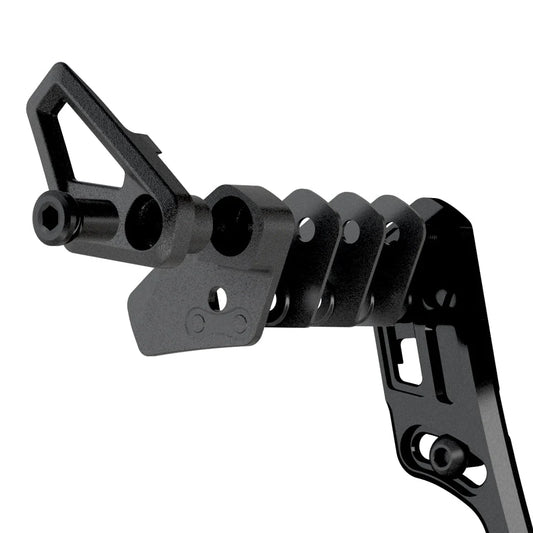
ONE UP Bash Guide ISCG05 V2 Chain Guide
Regular price 59,99 €Regular priceUnit price per -
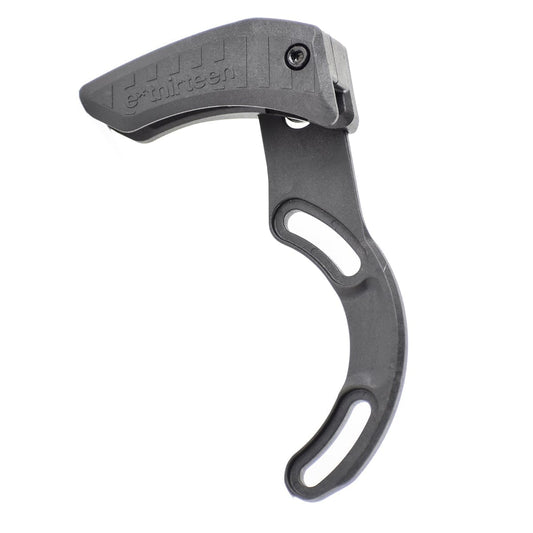
E.THIRTEEN E.SPEC+ E-MTB Bosch CX Gen4 Chain Guide
Regular price 39,99 €Regular priceUnit price per -
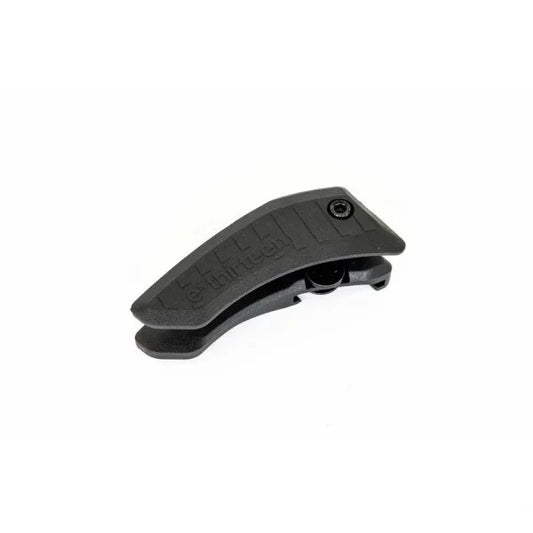
Upper Guide for E.THIRTEEN E.SPEC PLUS Chain Guide
Regular price 9,99 €Regular priceUnit price per -
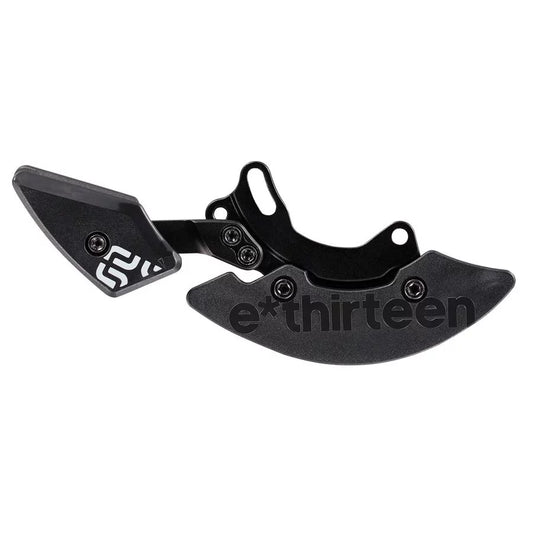
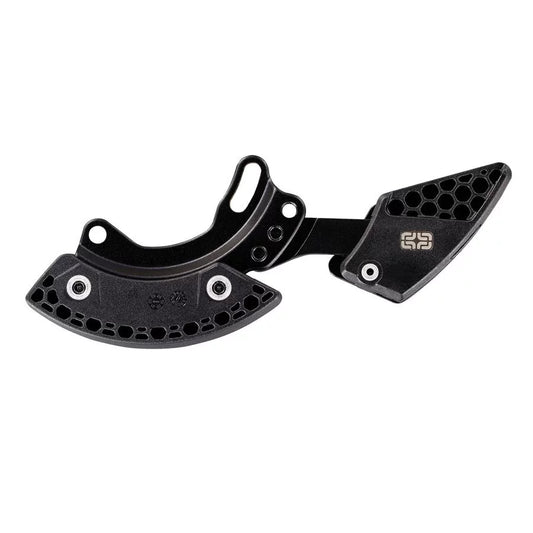
E.THIRTEEN VARIO DH 28-36 Tooth Lower Chain Guide
Regular price 84,99 €Regular priceUnit price per -
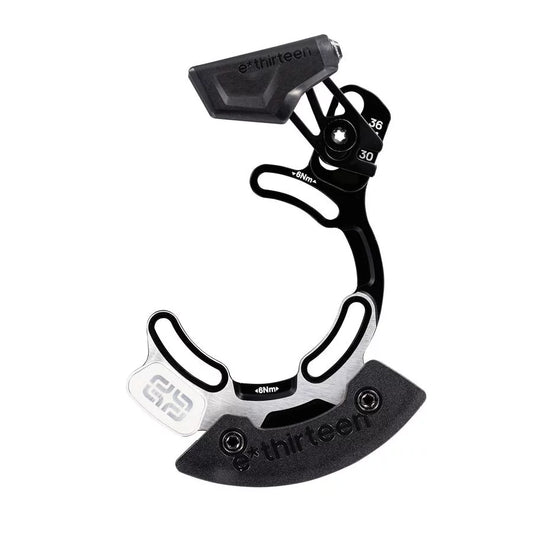
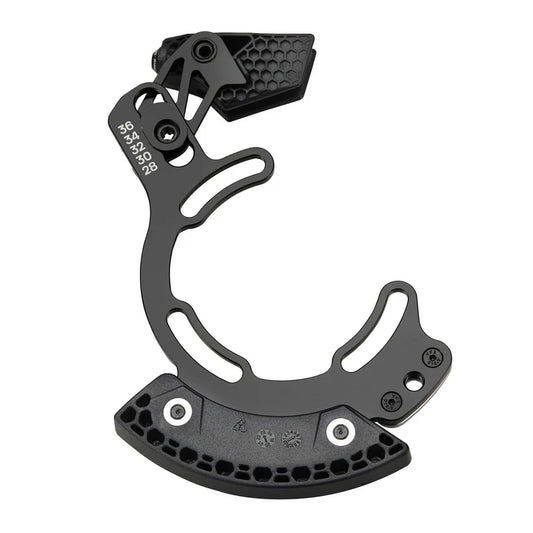
E.THIRTEEN VARIO ENDURO 28-36 Tooth Chain Guide
Regular price 89,99 €Regular priceUnit price per -
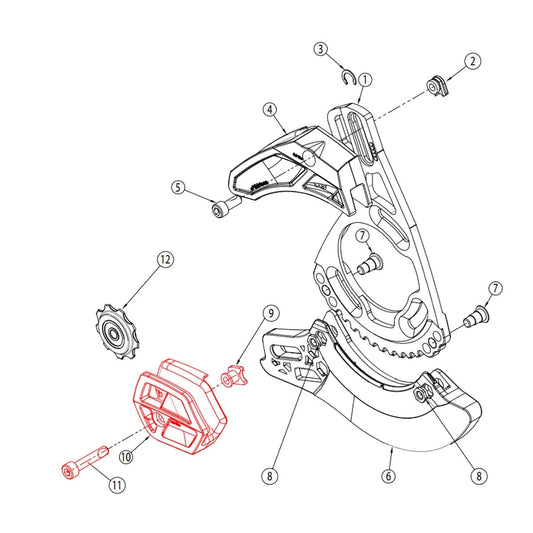
Lower Guide for E-THIRTEEN LG1+/LS1+ White Chain Guide #SLDR.LG1+LWR.W
Regular price 15,99 €Regular priceUnit price per -
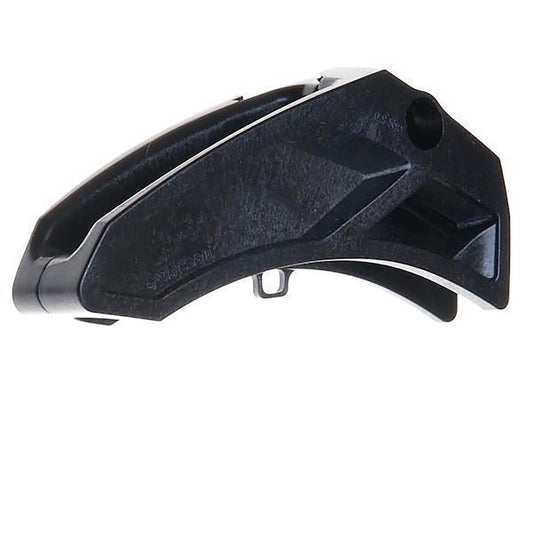
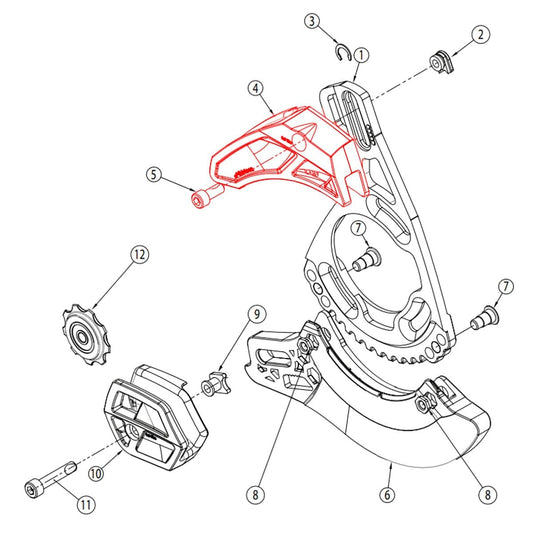
Upper Guide for E-THIRTEEN LG1+/LS1+/XCX Chain Guide Black #SLDR.LG1+UPR.B
Regular price 15,99 €Regular priceUnit price per -
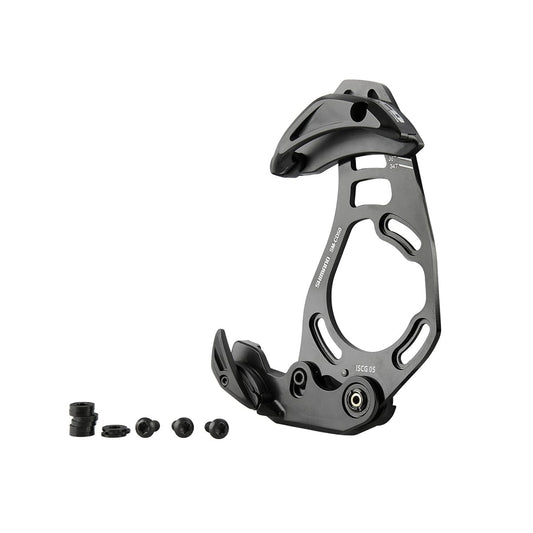
SHIMANO Saint SM-CD50 ISCG05 Chain Guide
Regular price 87,99 €Regular priceUnit price per


