


Allowing you to transport one or more bikes safely — both for the bikes themselves and for your vehicle — a bike carrier is a durable and worthwhile investment, ideal for varying your riding and discovering new routes, but one that must be chosen carefully in order to match your practice and lifestyle. And of course, make sure the selected model is compatible with your vehicle.
Characteristics of a bike carrier
Types of bike carriers: roof bar mounting, boot (tailgate) mounting, tow ball mounting or tow ball platform.EVERYTHING YOU NEED TO KNOW ABOUT BIKE CARRIERS
Roof bar mounting
Advantages
This classic solution does not obstruct rear visibility, leaves the boot and rear seats of the car completely free, and does not prevent operation of the tailgate either. It is possible to optimise roof loading by placing a roof box alongside the bike or bikes. Finally, the bikes are securely fastened and spaced apart from each other, so they are well protected. Manufacturers have developed quick-release fixings suitable for most bikes, including urban bikes with a step-through frame.
Disadvantages
Loading and unloading bikes from height is not always straightforward, and the front wheel sometimes needs to be removed. Note that wind resistance can increase fuel consumption and create aerodynamic noise on motorways. Of course, bikes fixed to the roof prevent access to car parks and other places with a height limit of 1.90 m: be careful not to forget you are carrying bikes, or you risk serious damage! Finally, check that the load does not exceed the car manufacturer's recommendations.
Boot-mounted carrier
Advantages
The most economical solution, boot mounting also allows easy bike loading (at the level of the top tube), without tools and at a comfortable height. The system is lightweight, compact, accessible and creates very little additional wind resistance.
Disadvantages
Installing the bike carrier itself is not always easy and can take time, particularly to find the right position: centred, neither too high nor too low. The straps must be well tensioned and evenly so in order to guarantee the stability of the whole assembly. It may also require you to slide under the rear of the car to hook up the lower straps.
Furthermore, with this system, access to the car boot is impossible when the bikes are loaded, and visibility via the rear-view mirror is greatly reduced.
If several bikes are loaded, they may come into contact with each other. It is therefore necessary to separate them with foam protection. The pedals or handlebars may also come into contact with the bodywork. Here too, foam inserts are advisable.
Finally, this solution is often not ideal for transporting children's bikes and urban/women's bikes that do not have a horizontal top tube.
It should be noted that regulations in France limit the boot-mounted load to three bikes.
Tow ball mounting
Advantages
Easy to install — provided of course that a tow bar and tow ball are fitted to your vehicle — this solution offers excellent stability and secures bikes as well as possible (up to four bikes transportable depending on the model). If it has a tilting function, the car boot remains accessible even with the bikes loaded.
Disadvantages
The maximum permitted weight for each bike is often around 15 kg, which in practice excludes electrically assisted bikes or downhill bikes. In all cases, the maximum permissible load must not be exceeded, and you should also check the tow ball nose weight (S indicator): the weight of the bikes plus the weight of the bike carrier must not exceed it.
Finally, rear visibility is reduced.
Tow ball platform
Advantages
The ultimate solution for transporting several bikes, the tow ball platform is easy to install and handle. Stable, it can feature a tilting function to allow free access to the boot (note that on certain vehicle types such as MPVs, leisure activity vehicles, vans, etc. with very large tailgates or side-opening doors, the tilting mechanism may not allow the boot to be opened).
Its loading capacity is maximum: up to six bikes for certain models. Able to support heavy, wide bikes with a long wheelbase, the platform is particularly suited to transporting electric bikes or downhill MTBs.
Bikes are generally held by the wheels and the frame with very precise adjustment, guaranteeing maximum stability, including for children's bikes and urban bikes and/or women's bikes with a step-through frame.
These bike carriers incorporate in most cases locks for the platform itself as well as for each bike, in order to secure your entire load.
Finally, the platform can be used to transport things other than a bike, such as a travel box available as an optional extra.
It is the bike carrier of choice for long journeys, especially as foldable models exist, for minimal bulk once you arrive at your holiday destination.
Disadvantages
As practical as it is, this solution remains quite expensive, making it the preserve of intensive users. It also takes up more space at the rear of the vehicle, which can cause parking difficulties.
Which bike carrier to choose?
Warning: The use of a bike carrier requires the following prerequisites before installation:
- - Vertical installation with the ball aligned with the axis of the swan neck;
- - The tow ball must comply with the ISO50 standard;
- - The maximum load capacity of the tow ball must exceed the weight of the bike carrier AND the weight of the bikes you wish to transport;
- - The distance between the tow ball and the vehicle's bumper must be at least 6.5 cm;
- - The tow ball must be made of steel or another at least equivalent material. Tow balls made of cast iron (GGG40) or aluminium are not suitable;
- - The electrical connection must be 7 or 13 pins (refer to local and legal specifications);
- - The coupling cannot be placed directly on or just below the tow ball.
Beyond compatibility with your vehicle — which must obviously take priority above everything else — the choice of a bike carrier should be based on the number of bikes to be transported, their weight, the shape and size of their frame, the frequency of use of the carrier, and the storage location.
Number of bikes
For transporting more than 3 bikes, tow ball solutions are the way to go: check the maximum weight permitted by the bike carrier (total weight and weight of each bike) and by the tow bar itself (weight of the bike carrier + bikes).
Weight
Of course, the more bikes there are, or the heavier they are (freeride, downhill or electric bikes), the more robust the bike carrier will need to be.
The type of bikes
The sometimes unusual shape of bikes can cause problems: certain very complex frames do not fit on a boot-mounted bike carrier, for example. MTBs fitted with high-volume tyres (fat bikes or 27.5+) can be difficult to position correctly on a platform's rails.
Conversely, children's bikes and urban and/or women's bikes with a step-through frame are difficult to fit on boot-mounted or tow ball bike carriers, whereas a roof-mounted carrier or a platform will prove ideal.
Furthermore, very high-end, fragile bikes do not cope well with contact with other bikes: a roof-mounted fixing is then ideal.
Frequency of use
For occasional use, a boot-mounted carrier is economical and flexible to use. For very frequent trips, on the other hand, a tow ball carrier — compact and quick to install, while offering great stability — is ideal.
Security
Is a lock necessary to protect your bike carrier? Some models have one integrated. It is essential if your car is likely to be left outside overnight in an unsecured location.
In all cases, do not forget that a number plate board and offset rear lights may be required with boot-mounted or tow ball bike carriers. To limit the investment, take into account your current vehicle and its equipment: do you already have roof bars? A roof mounting is then a wise choice. Calculate the total height with the bikes, so as not to be caught out approaching a bridge for example. If your car is already very tall, do not forget that installing bikes on the roof could be very complicated. The same reasoning applies to the tow bar: if it is already fitted, a tow ball carrier represents a reliable and relevant solution.
ACCESSORIES - Bike Racks
-
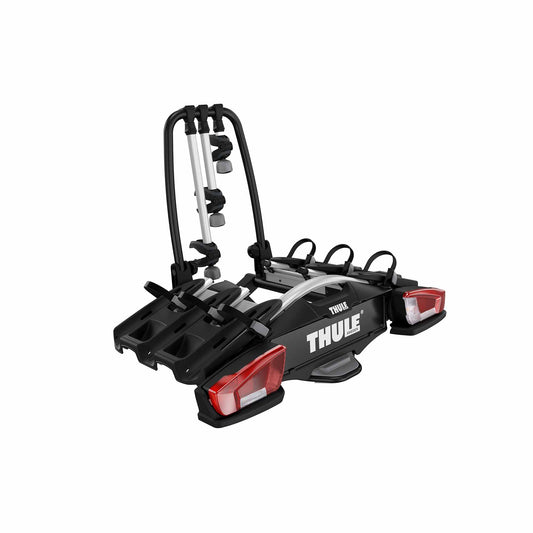
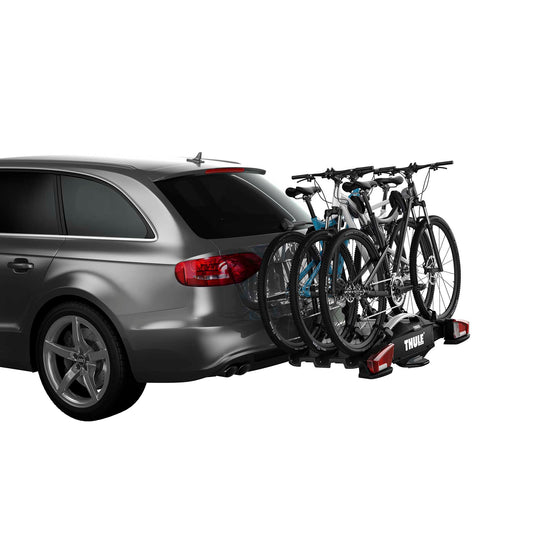
THULE VELOCOMPACT 3-Bike Towbar Rack
Regular price 589,90 €Regular priceUnit price per -
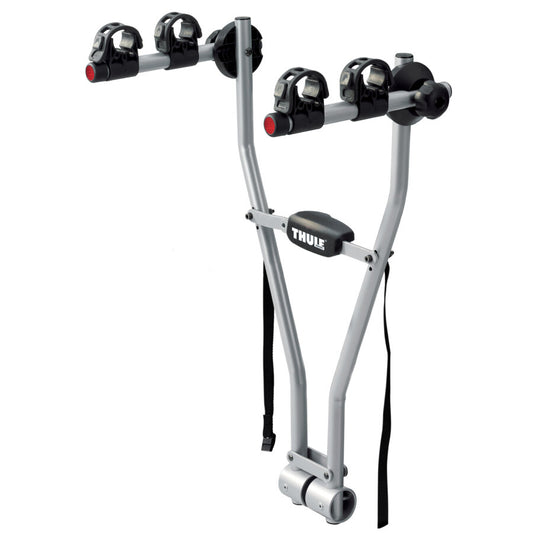
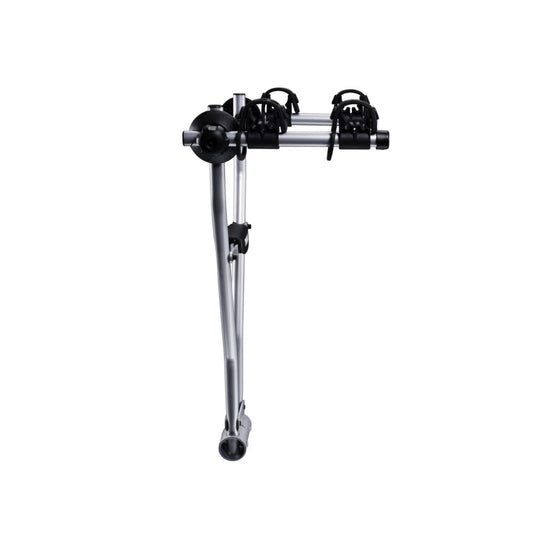
THULE XPRESS 2-Bike Towbar Bike Rack
Regular price 89,99 €Regular priceUnit price per -
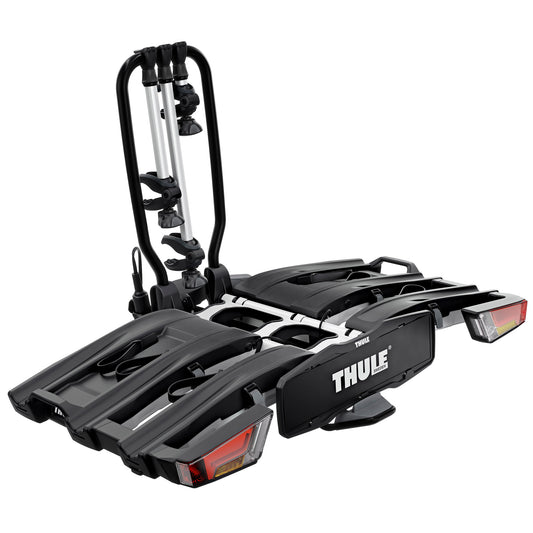
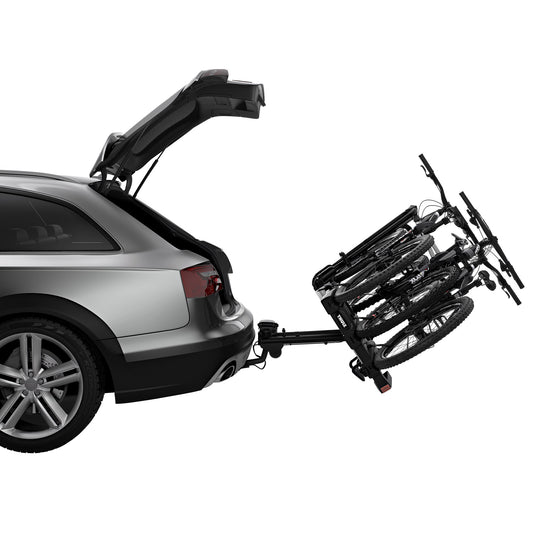
THULE EASYFOLD XT 3-Bike Towball Carrier
Regular price 929,90 €Regular priceUnit price per -
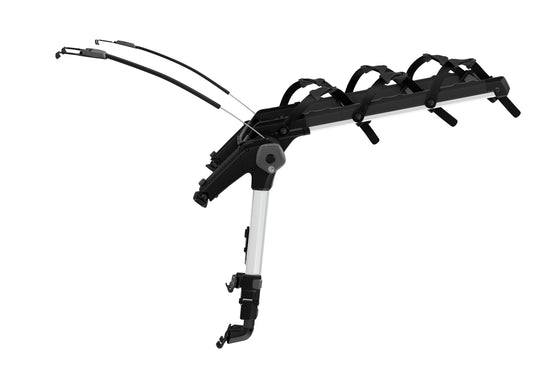
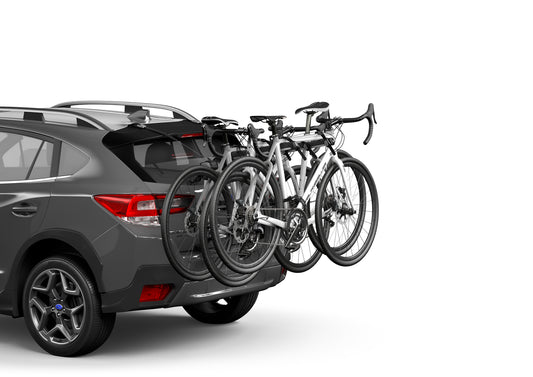
THULE OUTWAY 995 3-Bike Hatch Rack
Regular price 439,90 €Regular priceUnit price per -
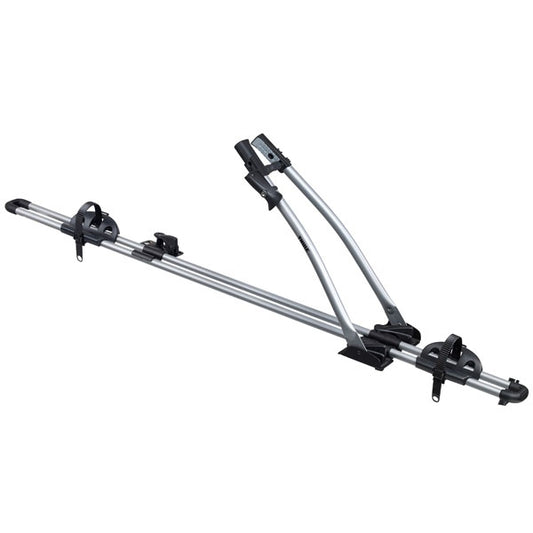
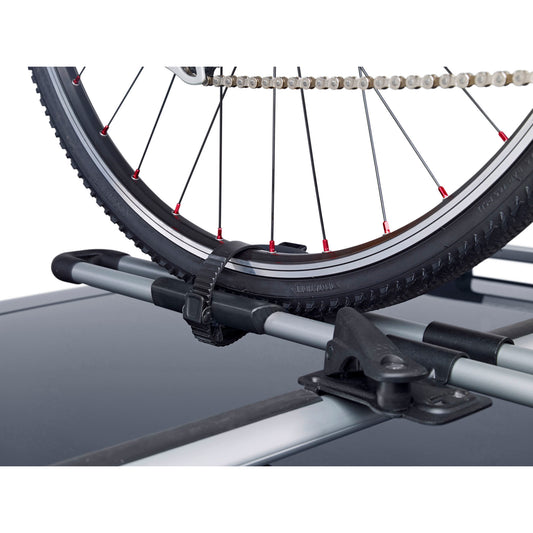
THULE FREERIDE 1-Bike Roof Carrier
Regular price 89,99 €Regular priceUnit price per -
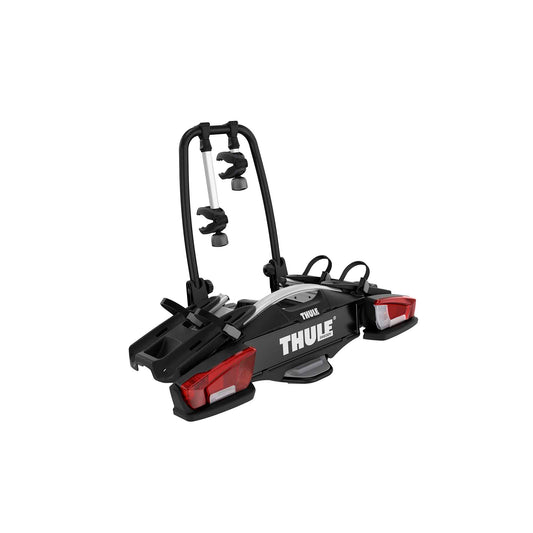
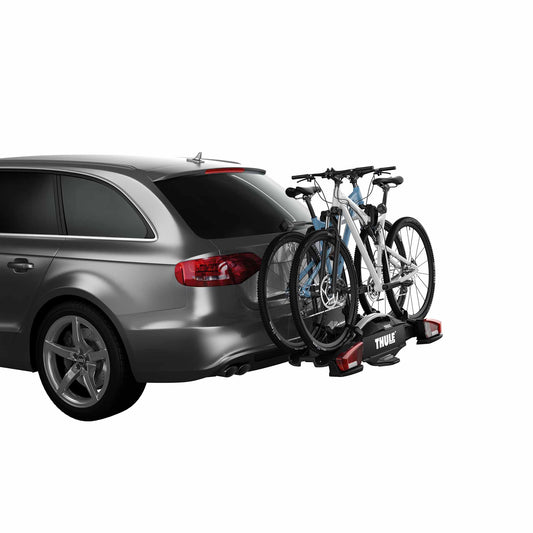
THULE VELOCOMPACT 2-Bike Tow Bar Bike Rack
Regular price 459,90 €Regular priceUnit price per -
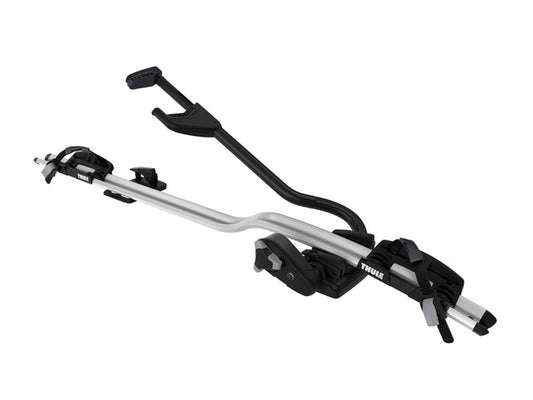
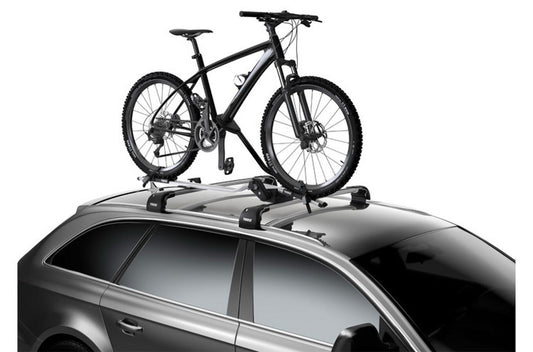
THULE PRORIDE 1 Bike Roof Rack
Regular price 179,90 €Regular priceUnit price per -
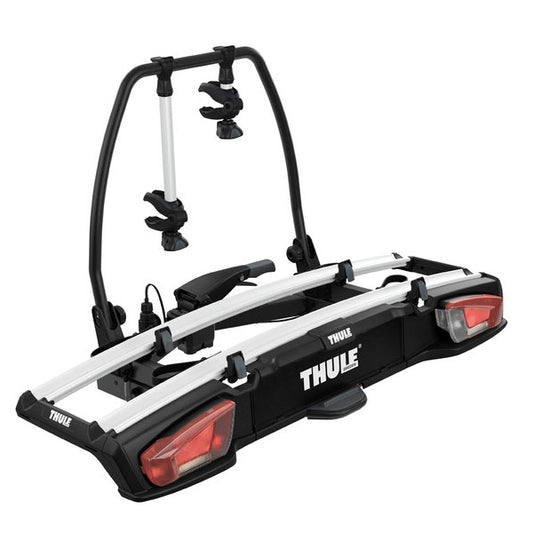
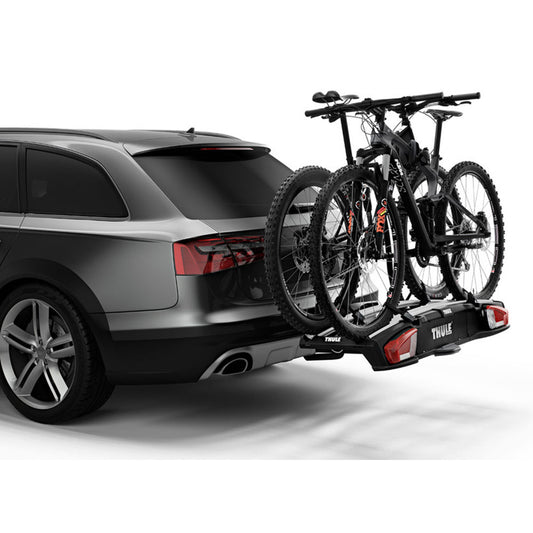
THULE VELOSPACE XT 2-Bike Towball Bike Rack
Regular price 690,90 €Regular priceUnit price per


