


Why switch to electronic shifting?

Electronic shifting on an MTB is reaching maturity with an ever-wider range of products! But why switch to electronic shifting after all? An advantage or a source of problems?
Here are some answers.
Tired of replacing your cable and housing kit every season? That is already one of the advantages of electronic shifting. Indeed, the main enemy of cable-operated shifting is friction. As soon as a little mud or dirt gets inside your cable and housing kit, the friction between these two elements increases. That is when problems begin. Corrosion or a lack of lubrication caused by time or water inevitably finding its way in creates the same kind of issue. Electronic shifting puts an end to this in a fairly simple way: no more cable, no more housing, so no more problem.
Fed up with constantly readjusting your settings? Electronic shifting solves that too. Even though it is very durable, a steel cable works and therefore stretches slightly throughout its life. The opposite is true for the outer casing, which compresses over time. As a result, this adjustment needs to be checked and fine-tuned from time to time. On an electric MTB, the derailleur positions itself automatically to align perfectly with each gear without any input from us.
Finally, here are a few more bonuses... Since the adjustment is purely electronic, the field of possibilities is wide open! Depending on the brand, here are some examples of features available with electronic shifting:
- Adjusting electronically controlled forks from a single unit
- Reading and recording gear information (sprocket/chainring used) on a GPS
- The ability to modify the way gears are controlled (a single control for both front and rear derailleurs, the possibility of changing gears on the left, etc.)
Despite all these advantages, some people may still have concerns about electronic systems. The most frequent criticisms relate to water resistance and battery life. Regarding resistance to water and mud, these systems have already proven themselves over several years, particularly in Cyclocross where conditions can be extreme. As for battery life, depending on the version (one or two chainrings), manufacturers claim between 500 and 1,000 km — more than enough to ride for three days without worrying about the battery running out!
So, convinced by electronic shifting?
MTB - Complete Groupsets
-
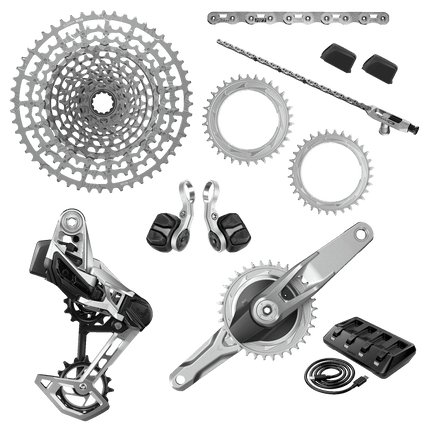
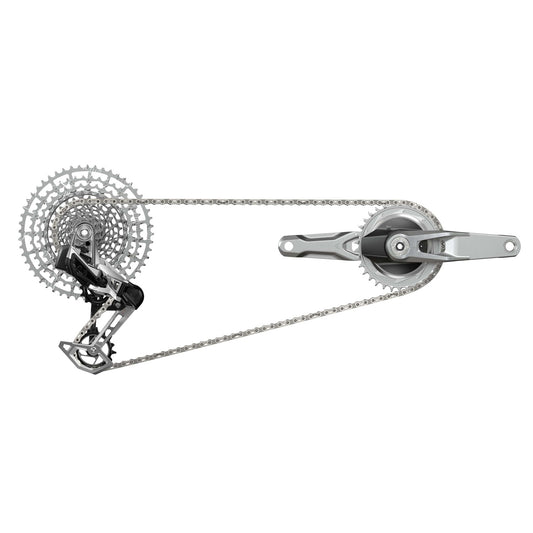
SRAM EAGLE T-TYPE TRANSMISSION 1987 Groupset - Limited Edition
Regular price 1.999,90 €Regular priceUnit price per -
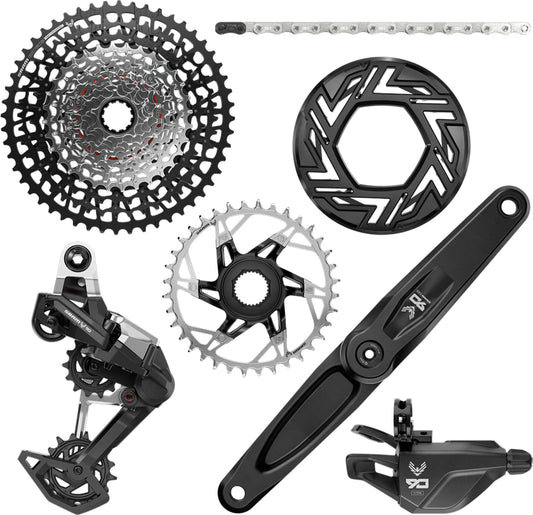
SRAM EAGLE 90 T-TYPE 12V 36-Tooth e-Bike Groupset for BOSCH Motor
Regular price 569,90 €Regular priceUnit price per -
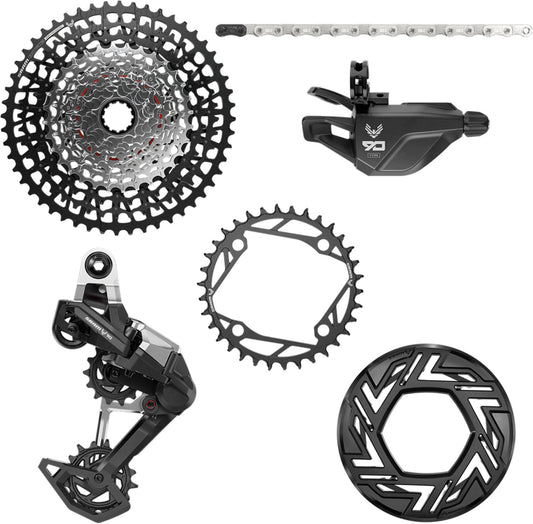
SRAM EAGLE 90 T-TYPE 12-Speed E-Bike Groupset 34 Teeth
Regular price 499,90 €Regular priceUnit price per -
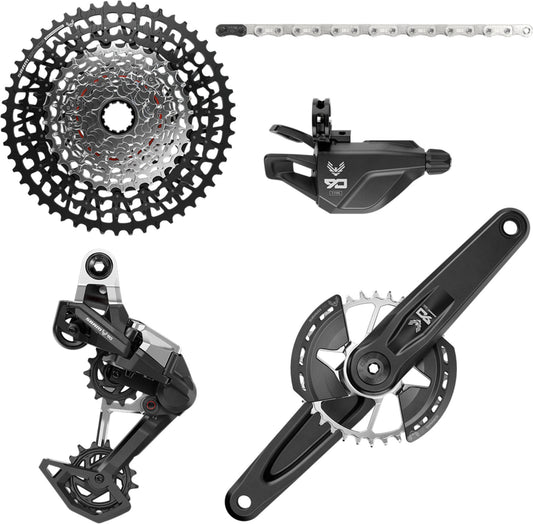
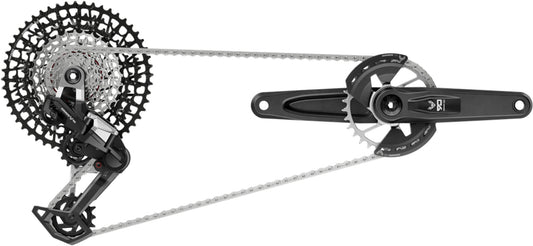
SRAM EAGLE 90 T-TYPE DUB 12V 32-Tooth 2-Guards Groupset
Regular price 549,90 €Regular priceUnit price per -
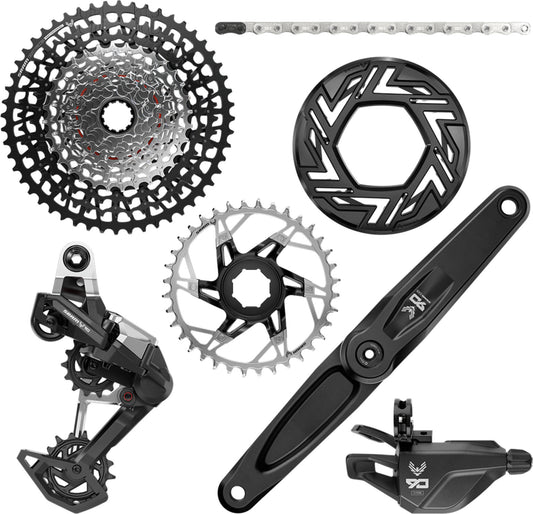
SRAM EAGLE 90 T-TYPE 12V 36-Tooth eMTB Groupset for BROSE/SRAM Motor
Regular price 569,90 €Regular priceUnit price per -
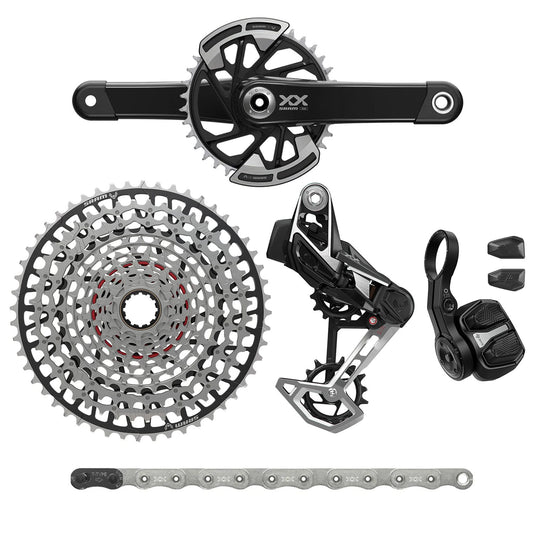
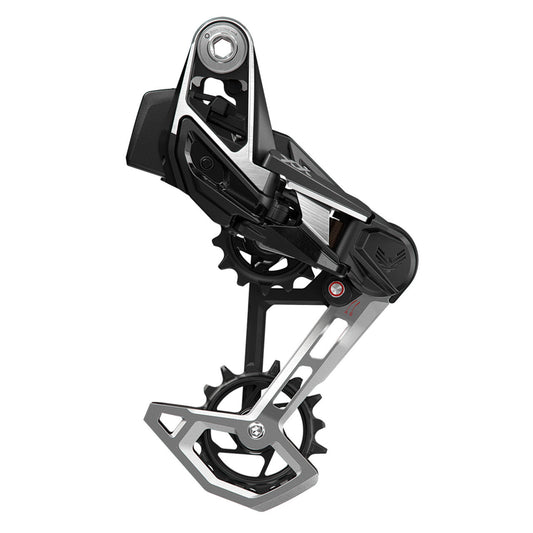
SRAM XX EAGLE T-TYPE AXS Q174 DUB WIDE 32-Tooth 2-Guards 10/52 Groupset
Regular price 1.799,90 €Regular priceUnit price per -
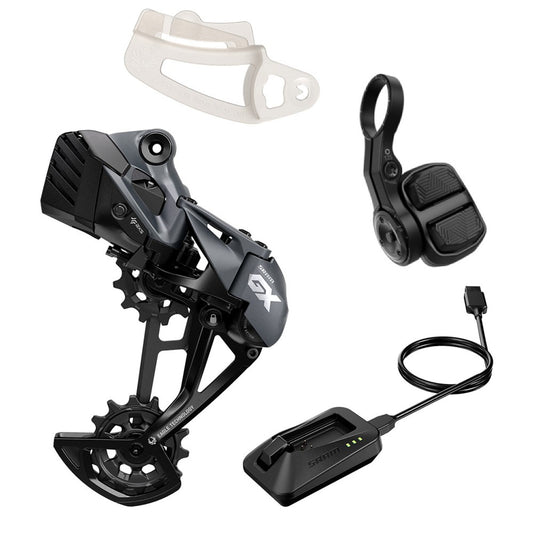
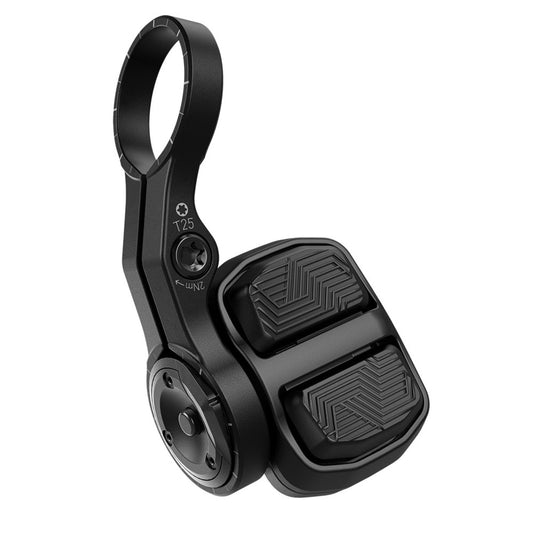
SRAM GX EAGLE AXS POD 12-Speed Upgrade Kit
Regular price 439,90 €Regular priceUnit price per -
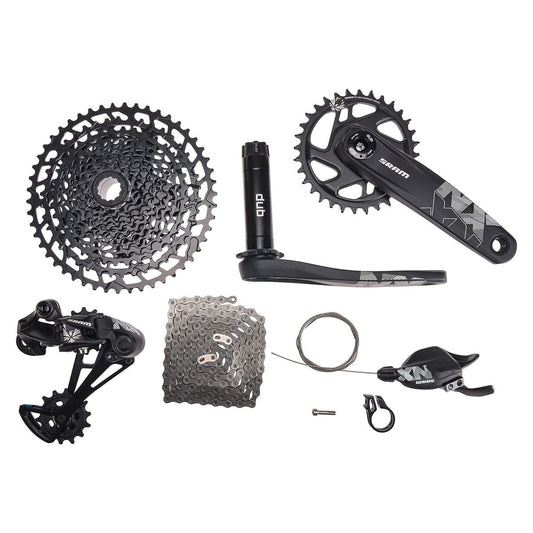
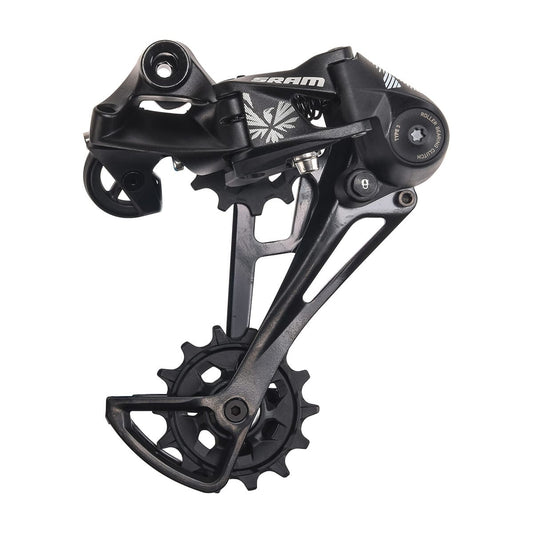
SRAM NX EAGLE 12V Single Chainring DUB 32 Teeth 11/50 Groupset
Regular price From 239,90 €Regular priceUnit price per


