


How to choose your MTB crankset?
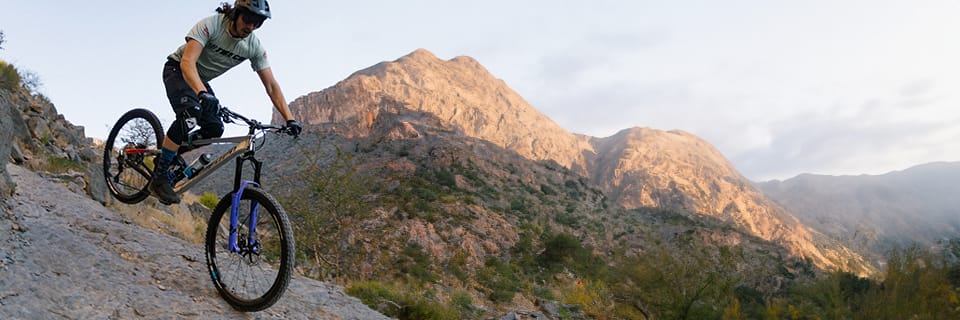
MTB crankset triple, double, or single? Hollowtech II, GXP or BB30 axle? It is easy to get lost in this jungle of standards... Here is everything you need to find your way.
Standards
- Axle types: Hollowtech, GXP, BB30,...
- Number of chainrings: 1, 2 or 3
- Speed compatibility: 9, 10, 11 or 12
- Crank length: 165, 170 or 175 mm
- The Q-Factor
- Chainring sizes
Types of cranksets
The first element to consider when choosing a crankset is the bottom bracket of your frame. Indeed, depending on the brand, there are different axle standards. To help you identify what you need, here is a list of the most common ones:
In the case where the crankset axle is part of the bottom bracket:
- a Octalink 2nd version: cylindrical axle, 8 splines, 9 mm long.
- b Square taper ISO: tapered square axle, 12.5 mm at the end of the axle.

In the case where the crankset axle is part of the crankset, also known as a through-axle:
 |
 |
 |
|
Hollowtech II, X-type, Megaexo 24 mm diameter axle a. |
GXP 22 mm diameter axle on the left b1, 24 mm on the right b2. |
BB30 30 mm diameter axle c. |
 |
 |
|
|
SRAM Dub 28.99 mm diameter axle c. |
PRAXIS M30 28 mm diameter axle on the left e1, 30 mm on the right e2. |
|
REMINDER: for an MTB with a threaded bottom bracket shell of the BSC type, in the case of Hollowtech II, X-type, Megaexo and GPX, there are 2 axle lengths depending on the frame shell. The axle can be approximately 115 mm for a 68/73 mm bottom bracket or approximately 130 mm for an 83 mm shell.
Please note that on Fat Bikes, there are 2 bottom bracket axle length standards that differ depending on the length of the rear wheel axle.
Regarding the number of chainrings, today's trend is to reduce the number of front chainrings and increase the number of rear speeds. Indeed, by reducing the number of front chainrings, duplicate gears are eliminated and the lifespan of the drivetrain is improved. To date, the ultimate drivetrain is the 1x12-speed: progressive ratios, no duplicates, simpler, more reliable and lighter.
Like the rest of the drivetrain, the crankset is designed to work under a speed standard; you therefore cannot pair a 9-speed crankset with a 10-speed drivetrain, for example.
You will have a choice of several crank lengths between 165, 170 and 175 mm. It is important to have a crank length proportional to the length of your legs.
To find the crank length that suits you, here is the calculation:
- Inseam less than 81 cm: 165 mm cranks.
- Inseam between 81 and 86 cm: 170 mm cranks.
- Inseam greater than 86 cm: 175 mm cranks.

We should remind you, however, that since the leverage effect is greater with longer cranks, you will need to exert less force; conversely, if they are shorter, you will have less distance to cover to complete one pedal revolution, making it easier to increase your cadence. However, this phenomenon is not easy to notice for an amateur rider.
For certain models, you will also have the option of choosing the distance between the two pedal mounting points, known as the Q-Factor*. The average value is approximately 170 mm. Above the average value, the crankset will be particularly wide for greater stability on the bike; below it, it will be narrower to facilitate pedalling.

WARNING: some frames do not accept a crankset with too narrow a Q-Factor, as the cranks would then come into contact with the chainstays of your frame.
The chainring size of cranksets works in the opposite way to cassettes: the fewer teeth a chainring has, the less effort you will need to turn the cranks. Ideal for climbs!
Which crankset for my discipline?
In the case of a crankset replacement, you will not necessarily have a choice beyond quality and chainring size. Indeed, the choice will be made based on the bottom bracket type (axle compatibility) and the number of chainring(s)/speeds given by the gear shifters and derailleurs.
If you are starting from scratch:
-
Touring
For touring, a double chainring will provide maximum versatility with a 24/36 chainring setup and an 11/36 cassette.
-
Cross-Country
For Cross-Country rides, a competitor will appreciate the efficiency and reliability of a single chainring setup of 32 teeth with an 11-speed 10/42 or 11/42 cassette, or even 12-speed. Favour a hardtail MTB with this type of setup for greater responsiveness.
-
All-Mountain / Enduro
For All-Mountain or Enduro riding on your full-suspension MTB, you can either opt for reliability with an 11-speed single chainring setup of 30 teeth, or for versatility with a double chainring setup of 24/38 and an 11/36 cassette.
-
DH / Freeride
Regarding DH / Freeride, fitting a single chainring between 32 and 38 teeth with a chain guide is the obvious choice for reliability.
Découvrez tous nos conseils & Tutoriels
MTB - Cranksets and Cranks
-

SHIMANO SLX FC-M7100-1 Single Chainring 12-Speed Crankset
Regular price 64,99 €Regular priceUnit price per -
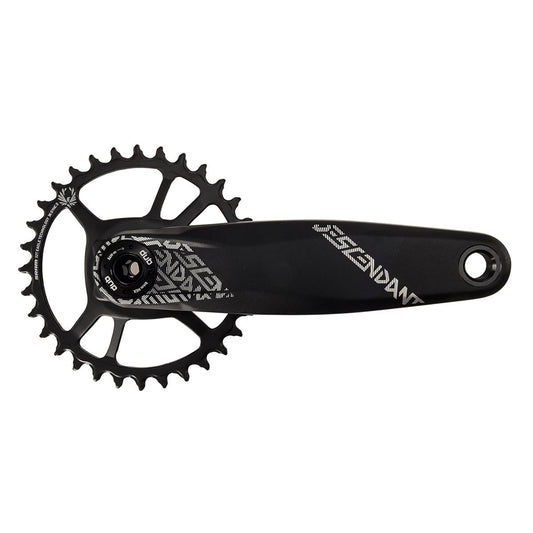
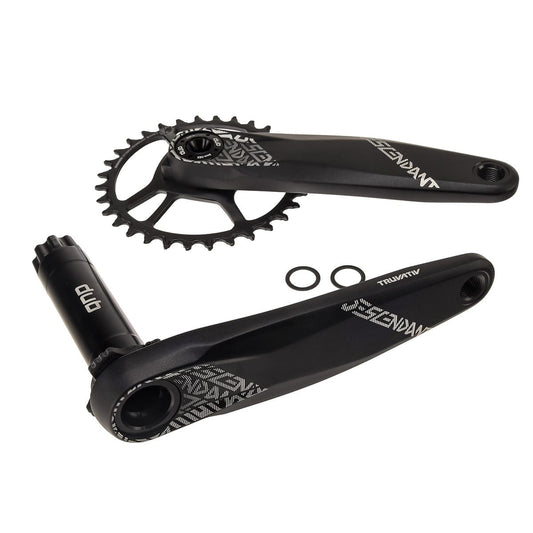
Single 11/12-Speed Crankset TRUVATIV EAGLE DESCENDANT ALU 6K DUB Direct Mount Black
Regular price From 59,99 €Regular priceUnit price per -
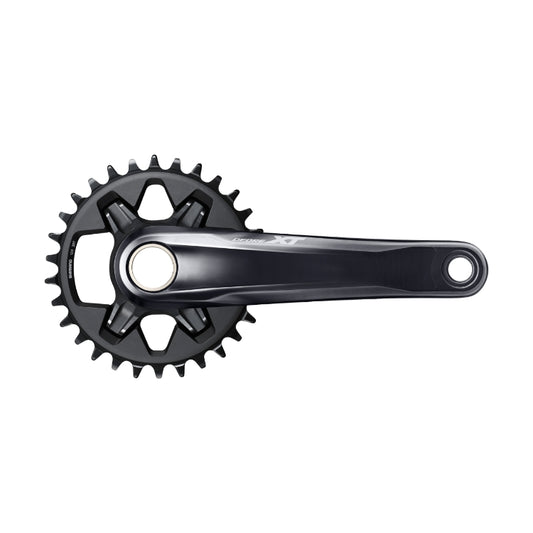
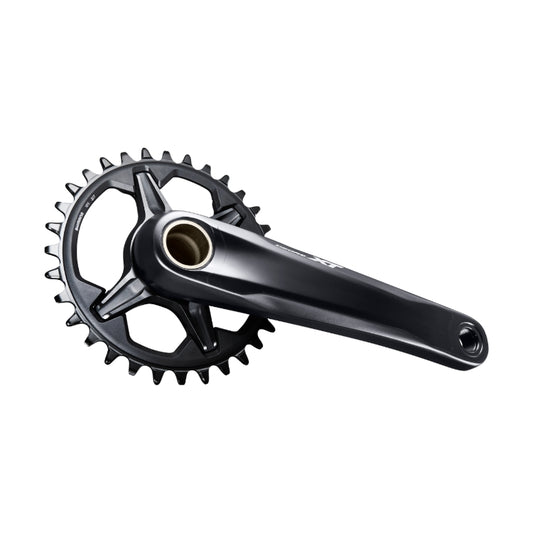
SHIMANO XT FC-M8100-1 Single 12-Speed Crankset
Regular price 79,99 €Regular priceUnit price per -
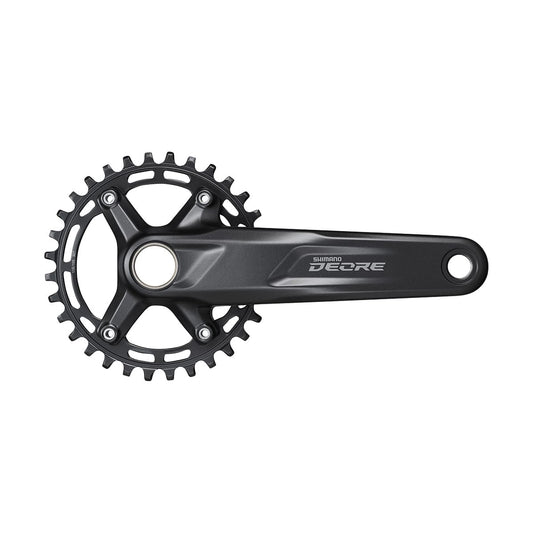
SHIMANO FC-M5100-1 Single 10/11-Speed MTB Crankset
Regular price From 49,99 €Regular priceUnit price per -
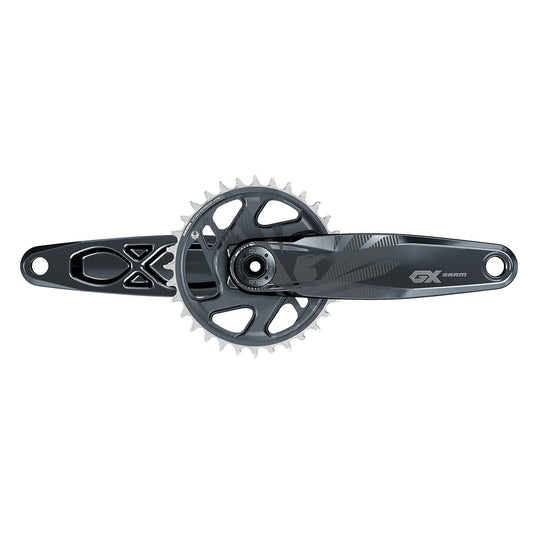
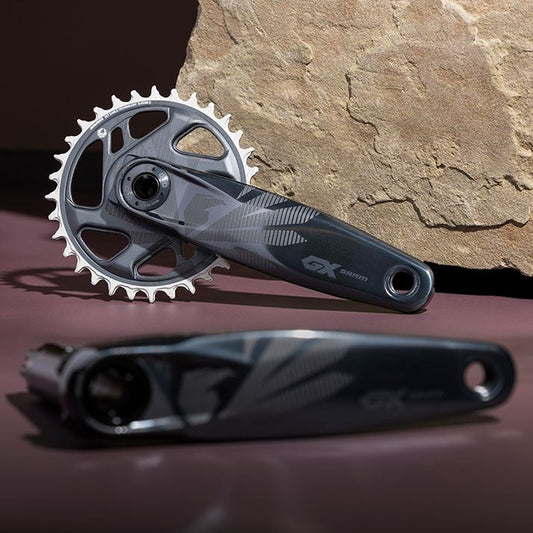
Single-Ring 11/12-Speed Crankset SRAM EAGLE GX DUB BOOST Lunar
Regular price From 79,99 €Regular priceUnit price per -
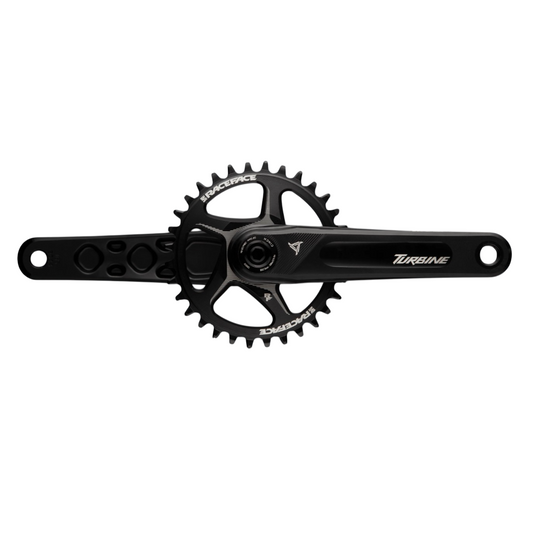
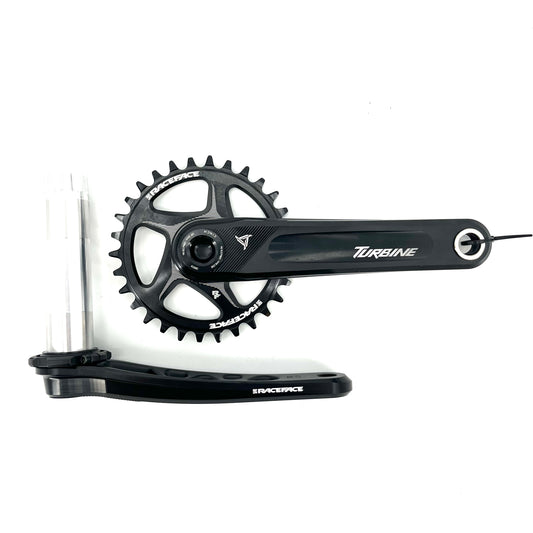
RACE FACE TURBINE CINCH Shimano 12-Speed Single Chainring Crankset
Regular price 69,99 €Regular priceUnit price per -

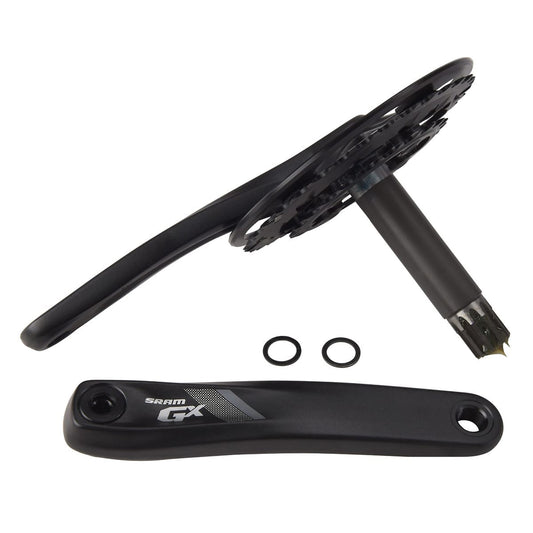
10-Speed Crankset SRAM GX 1000 GXP
Regular price From 119,90 €Regular priceUnit price per -
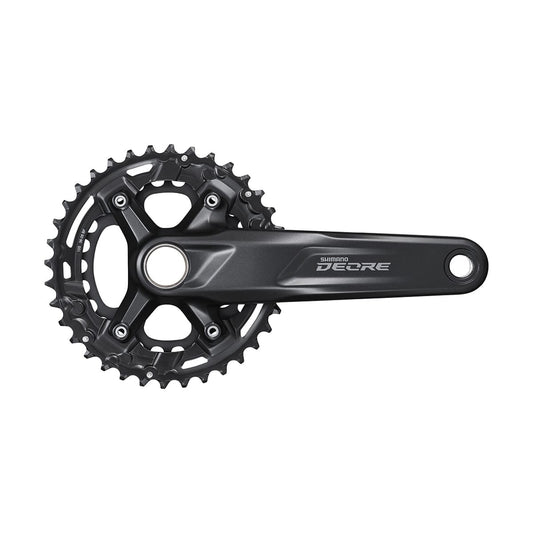
SHIMANO FC-M4100-2 10-Speed Crankset
Regular price From 63,99 €Regular priceUnit price per


