


Hardtail or full-suspension: how to choose the right mountain bike for your riding style?
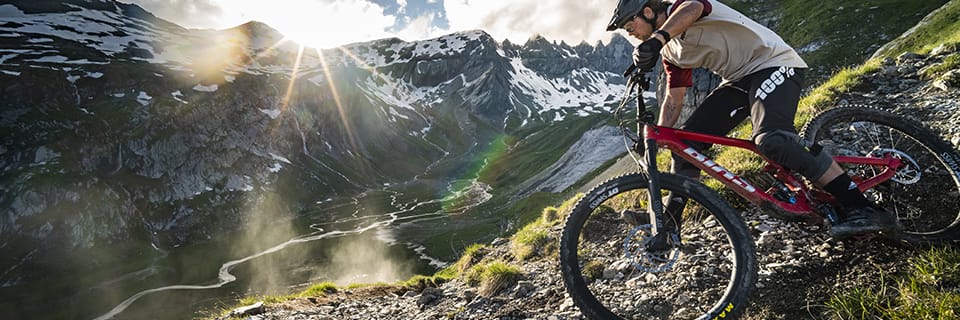
For beginners, the concepts of hardtail mountain bikes (featuring only a suspended fork) and full-suspension mountain bikes (featuring a dual damping system with a fork and a rear shock on the frame) may not mean much. Yet, depending on your preferences, your riding style, and your budget, this is the first choice you will need to make when considering buying a mountain bike. Here are some pointers to help guide you.
If in the past the choice boiled down roughly to comfort versus performance, suspension kinematics have made enormous progress in recent years, virtually eliminating any pedalling bob from rear suspensions and thus greatly reducing the performance differences between the two types of bike. Notable differences remain, however. A hardtail will, at the same price point, be lighter, simpler to maintain, and more affordable. A full-suspension bike, for its part, will offer greater comfort, better traction, and superior shock absorption.
EVERYTHING YOU NEED TO KNOW ABOUT HARDTAIL MOUNTAIN BIKES
As the name suggests, a hardtail mountain bike is built around a suspended fork and a rigid frame. Simpler to design and manufacture, it logically costs less to produce than a full-suspension bike. A hardtail is therefore more affordable, making it the ideal bike for beginners or those who want to ride occasionally for leisure rides near home at the weekend or on holiday.
For the experienced rider, it will allow, at the same price as a full-suspension bike, access to a higher level of components (for example, a carbon frame versus aluminium on a full-suspension) and/or higher-spec equipment (fork, drivetrain, brakes).
The simpler frame structure, and the absence of a rear shock, also allows, at the same level of spec, a lighter bike that requires less maintenance.
This absence of a rear shock generally leads to greater overall stiffness, which ensures good efficiency. However, the flip side of this is poorer traction, since without suspension the rear wheel is not kept in contact with the ground, and less comfort on rough terrain.
EVERYTHING YOU NEED TO KNOW ABOUT FULL-SUSPENSION MOUNTAIN BIKES
Combining a front suspended fork with a rear shock, full-suspension mountain bikes occupy an increasingly prominent place in the MTB market, whether they are pedal-powered or electrically assisted. They delight all nature lovers who want to enjoy optimal comfort and uncompromising safety, and allow riders to explore terrain that would be inaccessible on a hardtail.
The first characteristic that stands out when moving from a hardtail to a full-suspension is the comfort provided by the rear suspension, which allows you to ride almost anywhere with confidence.
The presence of the rear shock also guarantees exceptional traction by keeping the rear wheel planted on the ground regardless of the terrain's irregularities. Furthermore, manufacturers have made enormous progress in neutralising the pedalling bob inherent to the bike's articulation, thanks to extensive work on the kinematics. Combined with the fact that some shocks offer the possibility of partial and/or full lockout to tackle rolling sections with maximum efficiency, you end up with a bike whose performance is now as good as, or even better than, a hardtail.
Which mountain bike for my riding style?
For a typical trail riding style, where the key criteria are price and simplicity, the ideal choice is a hardtail mountain bike in steel or aluminium. Some riders may prefer a full-suspension bike for extra comfort, but the cost will be higher. Preferably in 27.5" or 29", with a fork travel of between 100 and 130 mm for greater versatility.
For Cross-Country, an aluminium or even carbon hardtail will provide maximum lightness and responsiveness. Wheels preferably in 29'', with a fork travel of between 80 and 120 mm to be as fast as possible on rolling sections as well as on technical terrain. However, for longer disciplines (such as Marathon), a full-suspension bike will be necessary.
For All-Mountain riding, we recommend a hardtail if your budget is tight, but more likely a full-suspension bike with 130 to 150 mm of travel. While most commonly found in aluminium, the frame can be made from various materials and in different wheel sizes depending on your expectations. Plenty of options to find an MTB capable of climbing very well while also being comfortable on even the most committed descents.
When it comes to Enduro, a full-suspension bike is the way to go. Recreational riders will opt for an aluminium frame, generally in 27.5", while competitive riders may be tempted by carbon, also most commonly with 27.5" wheels. For travel, the minimum is 140 mm, with the most adventurous riders going up to 180 mm. Not necessarily the best performer on climbs, it truly comes into its own on descents.
And finally, if you want to take up DH/Freeride, a full-suspension bike with 200 mm of travel is a must, generally in aluminium, although carbon is becoming increasingly widespread in this discipline for those chasing seconds at the finish line.
Hardtail vs full-suspension comparison
| Hardtail | Full-suspension |
|---|---|
| Equipment | Comfort |
| Weight | Manoeuvrability |
| Maintenance | Handling pleasure |
| Efficiency | Efficiency |
| Price | Traction |
Découvrez tous nos conseils & Tutoriels
MTB Universe
-
SHIMANO XT ULTEGRA CN-HG701-11 E-Bike Rated 11-Speed Chain
Regular price From 24,99 €Regular priceUnit price per -
12-Speed Chain SHIMANO XT ULTEGRA CN-M8100 Quick Link E-Bike Rated
Regular price From 28,99 €Regular priceUnit price per -
12-Speed Chain SHIMANO SLX 105 CN-M7100 Quick Link E-Bike Rated
Regular price From 18,99 €Regular priceUnit price per -
12-Speed Chain SRAM GX EAGLE
Regular price From 19,99 €Regular priceUnit price per -
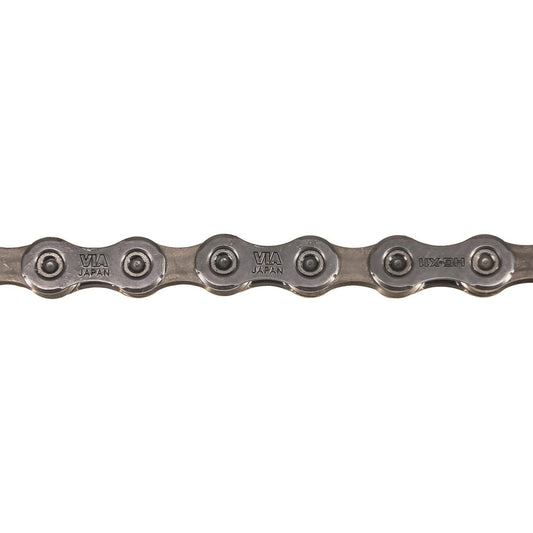
SHIMANO SLX 105 CN-HG601-11 11-Speed Chain E-Bike Rated
Regular price From 18,99 €Regular priceUnit price per -
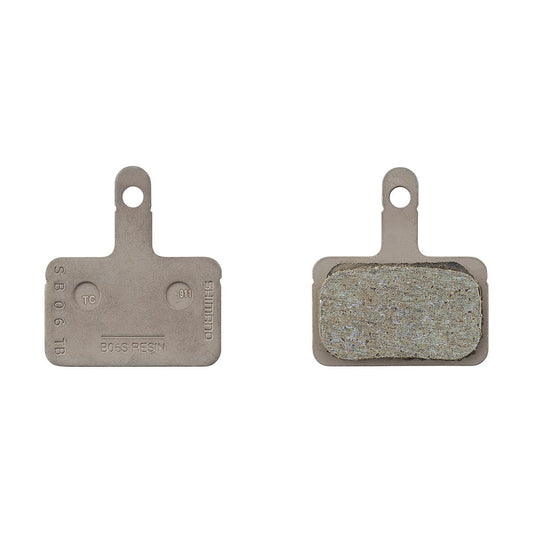
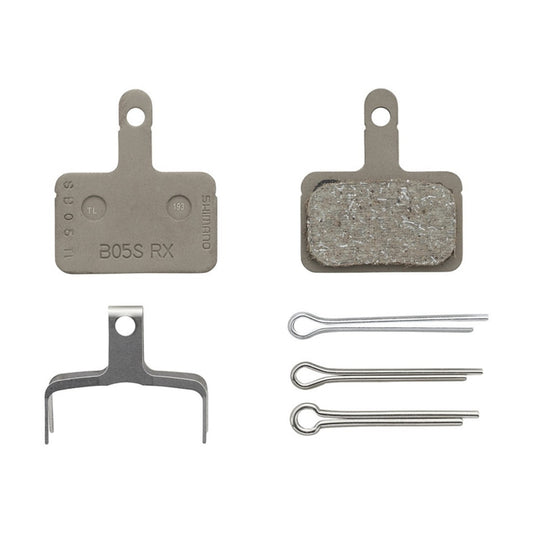
SHIMANO B05S-RX Organic Brake Pads
Regular price 5,99 €Regular priceUnit price per -
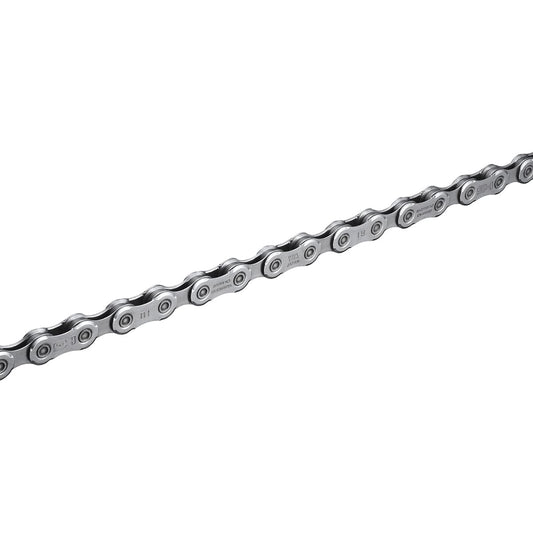
12-Speed Chain SHIMANO DEORE CN-M6100 Quick Link E-Bike Rated
Regular price From 15,99 €Regular priceUnit price per -
12-Speed Cassette SHIMANO DEORE XT CS-M8100
Regular price From 94,99 €Regular priceUnit price per


